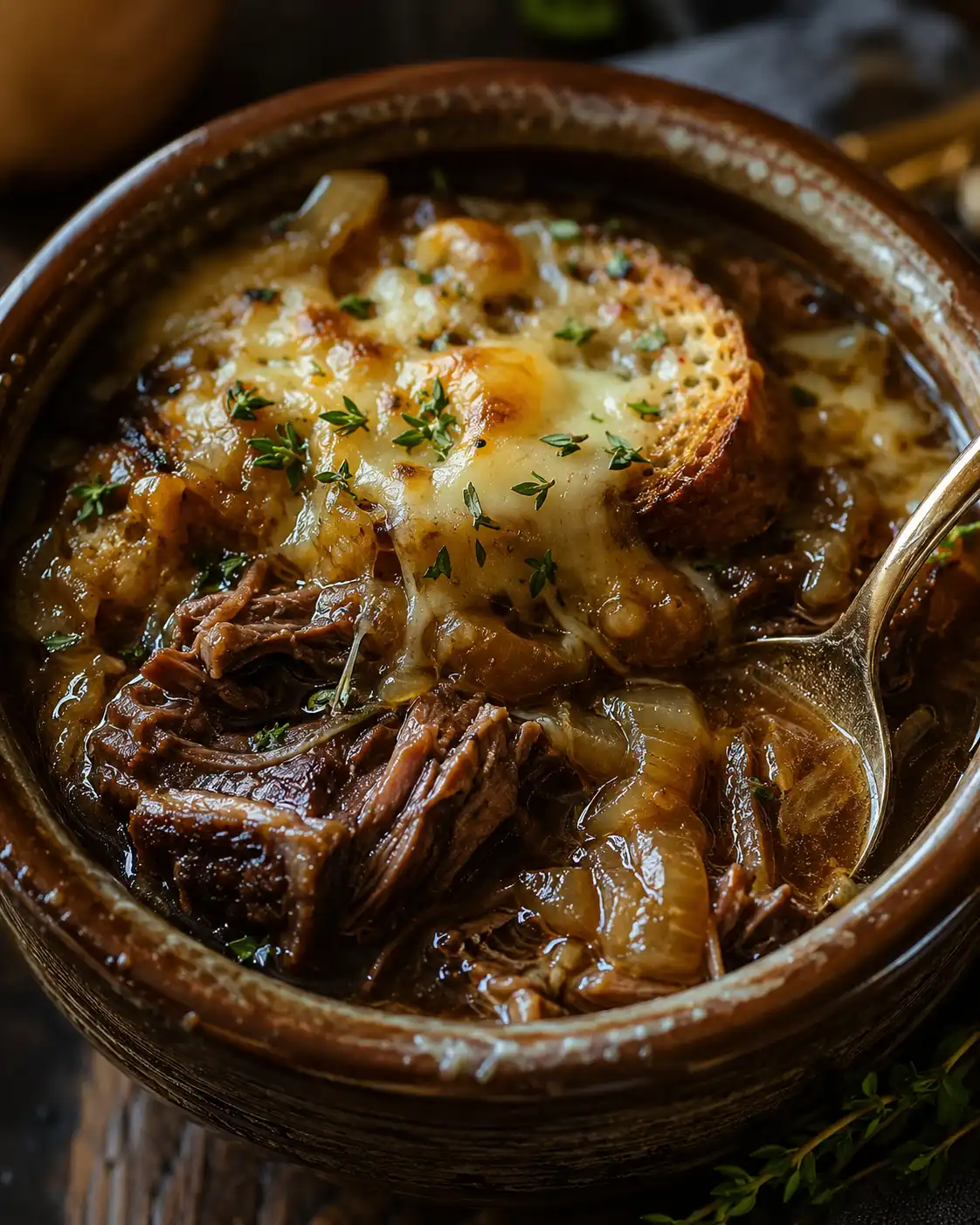
Introduction
Savory French Onion Beef Short Rib Soup is a masterful fusion of two beloved culinary traditions—the deep, caramelized elegance of classic French onion soup and the rich, fall-off-the-bone tenderness of braised beef short ribs. This soul-warming, restaurant-worthy creation transcends the boundaries of both dishes, delivering layers of umami depth, velvety texture, and aromatic complexity in every spoonful. Unlike traditional French onion soup—often built on beef broth and caramelized onions alone—this elevated iteration features slow-braised bone-in beef short ribs as its hearty, collagen-rich centerpiece, infusing the broth with natural gelatin, profound meatiness, and luxurious mouthfeel. It’s comfort food reimagined: rustic yet refined, deeply nourishing yet sophisticated, equally at home on a snowy winter evening or as the centerpiece of an elegant dinner party. Whether you’re seeking restorative warmth on a cold day, a showstopping weeknight meal that doubles as next-day leftovers, or simply a transformative way to celebrate the humble onion and humble cut of beef, this soup delivers with unwavering richness and nuance.
The History
The lineage of Savory French Onion Beef Short Rib Soup traces back through centuries of European and American culinary evolution—though the dish itself is a relatively modern innovation born from cross-genre experimentation and ingredient-driven creativity. At its foundation lies soupe à l’oignon, a rustic French staple dating to Roman times and popularized in 18th-century Parisian taverns, where resourceful cooks transformed stale bread, pungent onions, and inexpensive beef trimmings into a sustaining, flavorful broth. The iconic version—featuring Gruyère-topped crostini—was codified in the mid-19th century and later exported globally via French culinary institutions.
Meanwhile, beef short ribs entered Western gastronomy as a “nose-to-tail” necessity—traditionally considered too tough for quick cooking but prized by immigrant communities (particularly Korean, Jewish, and Eastern European) for their unmatched richness when slowly braised. In America, short ribs gained wider appreciation in the mid-20th century, especially after WWII, as refrigeration and slow-cooking appliances made low-and-slow techniques more accessible. The convergence of these two traditions began gaining traction in the early 2000s among chef-driven gastropubs and farm-to-table kitchens—places where chefs like Thomas Keller (in The French Laundry Cookbook) and April Bloomfield (at The Spotted Pig) championed layered broths and heritage cuts. What started as a seasonal special—a riff on French onion soup using braised rib meat instead of shredded brisket or ground beef—evolved into a signature cold-weather staple. Today, it reflects broader food trends: reverence for collagen-rich broths (aligned with gut-health awareness), celebration of underutilized cuts (sustainability), and the rise of “elevated comfort food” as both cultural expression and culinary craft.
Ingredients Breakdown
Every element in this soup plays a precise, interdependent role—no ingredient is merely filler or garnish. Understanding their functions elevates both technique and flavor:
- Beef Short Ribs (bone-in, English-cut): The structural and flavor backbone. Bones contribute marrow and collagen; connective tissue melts into gelatin, yielding body and silkiness. English-cut ensures uniform braising and easy shredding. Look for well-marbled, ruby-red meat with creamy-white fat—avoid grayish or dry-looking ribs.
- Yellow Onions (5–6 large, ~3 lbs total): Not just aromatics—they’re the soul of the soup. High in natural fructose and quercetin, they caramelize deeply, forming complex Maillard compounds (nutty, buttery, savory notes) and soluble fibers that thicken broth naturally. Thin, even slicing ensures consistent browning.
- Dry Red Wine (Cabernet Sauvignon or Pinot Noir): Adds acidity to balance fat, tannins to enhance savoriness, and alcohol-soluble flavor compounds extracted from fond and meat. Avoid “cooking wine”—use something you’d drink. The alcohol fully cooks off, leaving only aromatic depth.
- Beef Stock (preferably homemade or high-quality low-sodium): Provides mineral-rich base notes and gelatinous structure. Homemade stock—simmered 12+ hours with oxtail, knuckle bones, and roasted vegetables—delivers unparalleled clarity and depth. Store-bought should contain *no* artificial flavors, MSG, or excessive sodium (aim for ≤300mg per cup).
- Tomato Paste (2 tbsp): A secret umami amplifier. Its concentrated glutamates and roasted sweetness deepen color and round out sharpness without tasting “tomatoey.” Must be cooked until brick-red and fragrant—this step unlocks its full potential.
- Garlic (6 cloves, smashed): Adds pungent alliin-derived sulfur notes that mellow into savory-sweet complexity during long braising. Smashing releases enzymes for better infusion.
- Fresh Thyme & Bay Leaves: Earthy, floral, and subtly medicinal—thyme’s thymol binds to fat molecules, carrying aroma throughout the broth; bay leaves lend a gentle camphorous lift that prevents heaviness.
- Unsalted Butter & Olive Oil (for sautéing): Butter adds lactose-based richness and browning capacity; olive oil raises the smoke point, preventing burnt butter. Their synergy creates the ideal fond foundation.
- Flour (all-purpose, for slurry—optional): Used sparingly *only* if additional thickening is desired post-braising. Traditionalists omit it for clarity; others appreciate a lightly viscous, spoon-coating texture.
- Gruyère Cheese (aged, grated): Not just topping—it’s integral. Aged Gruyère offers nutty, caramelized, slightly sweet notes and superior meltability due to balanced moisture and fat. Substitute only with Comté or aged Emmental.
- Baguette (day-old, sliced & toasted): Structural contrast—crisp exterior yields to tender, broth-absorbing crumb. Staling removes excess moisture, allowing it to soak up liquid without disintegrating.
- Fresh Parsley (flat-leaf, chopped): A bright, chlorophyll-rich finish that cuts through fat and lifts aroma—added only at service.
Step-by-Step Recipe
- Prep & Pat Dry: Remove short ribs from packaging; pat *extremely* dry with paper towels (critical for searing). Season generously with kosher salt and freshly ground black pepper on all sides. Let sit at room temperature 30–45 minutes.
- Sear the Ribs: Heat 2 tbsp olive oil + 1 tbsp unsalted butter in a heavy-bottomed Dutch oven over medium-high heat until shimmering. Add ribs in a single layer (don’t crowd—work in batches). Sear 4–5 minutes per side until deeply browned and crust forms. Transfer to a plate; tent loosely with foil.
- Caramelize the Onions: Reduce heat to medium-low. Add remaining 2 tbsp butter. Add thinly sliced onions and 1 tsp salt. Stir to coat. Cook *uncovered*, stirring every 5–7 minutes, for 45–60 minutes—until onions are jammy, mahogany-brown, and reduced by ~75%. Resist stirring too often; let them develop fond. If sticking, deglaze with 1–2 tbsp water—scrape brown bits.
- Build the Aromatic Base: Push onions to edges. Add smashed garlic and tomato paste to center. Cook 2–3 minutes, stirring constantly, until paste darkens to brick red and smells nutty. Stir in 1 tbsp flour (if using) and cook 1 minute more.
- Deglaze & Layer Liquids: Pour in red wine, scraping bottom vigorously to lift all fond. Simmer 4–5 minutes until reduced by half and alcohol smell vanishes. Add beef stock, thyme sprigs, bay leaves, and seared ribs (plus any accumulated juices). Liquid should *just* cover ribs. Bring to gentle simmer.
- Braise Low & Slow: Cover tightly with lid. Transfer to preheated 325°F (163°C) oven. Braise 3–3.5 hours, until meat is fork-tender and pulls cleanly from bone. Rotate pot halfway through. Check occasionally—add splash of stock/water *only* if liquid reduces too much.
- Rest & Strain: Remove pot from oven. Cool 20 minutes. Lift ribs out; place on cutting board. Strain broth through fine-mesh sieve into large bowl, pressing solids to extract maximum flavor. Discard thyme stems, bay leaves, and fibrous onion remnants. Skim solidified fat from surface with spoon or fat separator.
- Shred & Integrate Meat: When cool enough to handle, shred meat from bones, discarding gristle, cartilage, and excess fat. Return shredded meat to strained broth. Taste and adjust seasoning—usually needs more salt and a splash of sherry vinegar or lemon juice for brightness.
- Toast the Bread: Preheat broiler. Slice baguette ½” thick on diagonal. Brush both sides lightly with olive oil. Toast on baking sheet under broiler 1–2 min per side until golden and crisp. Cool slightly.
- Assemble & Broil: Ladle hot soup into oven-safe crocks or bowls. Top each with 2–3 toast slices. Generously mound grated Gruyère over bread (cover completely). Broil 2–4 minutes until cheese is bubbling, deeply golden, and lacy at edges. Watch closely—timing varies by broiler strength.
- Finish & Serve: Sprinkle with fresh parsley. Let rest 1 minute before serving (allows cheese to set slightly). Serve immediately with extra parsley and crusty bread on the side.
Tips
- Patience Pays Off: Caramelizing onions properly cannot be rushed. Low heat + time = depth. Rushing yields pale, watery onions lacking sweetness and umami. Use a wide, heavy pan for even evaporation.
- Searing Is Non-Negotiable: A proper crust on the ribs locks in juices and creates the foundational fond. If ribs steam instead of sear, they’ll boil—not braise—and lack flavor. Ensure pan is hot and ribs are dry.
- Skim Fat Strategically: Skim *after* resting and straining—not during braising. Chilling overnight makes skimming effortless, but if serving same-day, use a fat separator or chilled spoon to remove solidified fat.
- Broth Clarity Matters: For crystal-clear broth, avoid boiling during straining. Keep broth below 185°F (85°C) when reheating pre-service. Boiling emulsifies fat and clouds the liquid.
- Wine Choice Impacts Flavor: Avoid oaky, high-alcohol wines (like Zinfandel)—they turn bitter when reduced. Opt for medium-bodied, food-friendly reds with good acidity (e.g., Cru Beaujolais, Barbera, or Rioja Crianza).
- Toast Bread Ahead—but Broil Last-Minute: Toasted bread keeps well for 2 days in an airtight container. But broiling cheese must happen seconds before serving—otherwise, it weeps, separates, or hardens.
- Acid Is the Secret Bridge: A tiny splash (¼–½ tsp) of sherry vinegar or lemon juice stirred in *just before serving* lifts the entire soup—balancing fat, enhancing aroma, and unifying flavors without tasting “sour.”
- Respect the Rest: Letting braised ribs rest 20 minutes allows juices to redistribute. Skipping this leads to dry, stringy meat—even if perfectly cooked.
- Batch Cooking Friendly: This soup freezes beautifully for up to 4 months (without bread/cheese). Cool completely, portion into quart containers, leave 1″ headspace. Thaw overnight in fridge; reheat gently on stove—do not boil.
- Make Your Own Stock: For ultimate depth, simmer 3 lbs beef bones (knuckle, oxtail, marrow), 2 carrots, 2 celery stalks, 1 onion (quartered, skin on), 2 tbsp tomato paste, 2 tbsp apple cider vinegar, and 12 cups cold water for 18–24 hours. Strain, chill, skim fat.
Variations and Customizations
This recipe is inherently adaptable—respecting tradition while inviting personal expression. Here are thoughtfully curated variations, each preserving structural integrity and balancing flavor science:
- Vegetarian “Umami Bomb” Version: Replace short ribs with 2 cups dried porcini mushrooms (soaked 20 min, reserved liquid added to broth) + 1 lb roasted cremini and shiitake mushrooms. Use roasted onion puree + miso paste (1 tbsp white miso + 1 tsp red miso) for depth. Garnish with cashew “Gruyère” (blended soaked cashews, nutritional yeast, lemon, garlic powder).
- Korean-Inspired Short Rib Variation: Marinate ribs 2 hrs in ¼ cup soy sauce, 2 tbsp gochujang, 1 tbsp rice vinegar, 1 tbsp grated ginger, 2 minced garlic cloves, 1 tbsp brown sugar. Braise as directed—but replace wine with dry sherry and add 1 star anise pod. Finish with scallion oil and toasted sesame seeds.
- Provençal Herb Garden Twist: Add 1 tbsp herbes de Provence with thyme/bay. Stir in ½ cup chopped sun-dried tomatoes (oil-packed, drained) and ¼ cup Niçoise olives during last 30 minutes of braising. Omit Gruyère; top with feta and basil oil.
- Smoky Chipotle-Infused: Add 1–2 canned chipotles in adobo (minced) + 1 tsp adobo sauce when adding tomato paste. Finish with lime zest and cilantro. Serve with pickled red onions and avocado crema.
- Low-Carb/Keto Adaptation: Skip baguette entirely. Serve soup in deep bowls topped with crispy pancetta lardons, extra Gruyère, and chive oil. Thicken with xanthan gum (¼ tsp per quart) instead of flour.
- Instant Pot / Pressure Cooker Method: Sear ribs and onions using Sauté function. Deglaze with wine, then add stock, herbs, and ribs. Pressure cook on High for 60 minutes + 20-minute natural release. Strain, shred, adjust, then broil as usual.
- Gluten-Free Compliance: Ensure stock and wine are certified GF. Skip flour slurry—or use 1 tsp arrowroot mixed with cold broth. Use GF-certified baguette or gluten-free sourdough.
- Lighter “Bistro Style”: Use leaner beef chuck roast (cut into 2″ cubes) instead of short ribs. Reduce braise time to 2.5 hours. Add 1 cup diced leeks with onions for subtle sweetness. Top with Pecorino Romano for sharper, less fatty finish.
- Seafood Fusion (Surprising but Brilliant): After straining broth, poach 12 oz wild salmon fillet (skin-on) in broth for 8–10 minutes. Flake meat, discard skin. Stir in 1 cup shelled peas and dill. Top with lemon-dill crème fraîche instead of cheese.
- Breakfast-for-Dinner Version: Poach eggs directly in hot soup just before serving. Garnish with crispy fried shallots, chives, and a drizzle of truffle oil. Serve with rye toast points.
Health Considerations and Nutritional Value
Savory French Onion Beef Short Rib Soup is nutritionally dense—not “light,” but profoundly functional when prepared mindfully. A standard 1.5-cup serving (without bread/cheese topping) provides approximately:
- Calories: 320–380 kcal (varies by fat content and stock richness)
- Protein: 32–38g (complete, high-bioavailability protein from collagen-rich short ribs)
- Fat: 18–22g (predominantly monounsaturated and saturated from grass-fed beef—supports hormone health and satiety)
- Carbohydrates: 12–15g (mainly from onions’ prebiotic fiber—fructooligosaccharides feed beneficial gut bacteria)
- Key Micronutrients: Exceptionally high in iron (heme-iron, 4.5mg/serving), zinc (6.2mg), vitamin B12 (3.8mcg), selenium (28mcg), and collagen-derived glycine & proline (support joint, skin, and gut lining integrity).
Functional Benefits:
- Gut Health: Onions provide inulin—a potent prebiotic. Long-simmered collagen breaks down into gelatin, soothing intestinal mucosa and improving barrier function.
- Anti-Inflammatory Support: Quercetin in onions inhibits histamine release and NF-kB signaling; resveratrol in red wine (retained post-cooking) modulates COX-2 enzymes.
- Joint & Tissue Repair: Glycine and proline from collagen synthesis support tendon elasticity, cartilage regeneration, and wound healing—especially valuable for active individuals or aging populations.
- Metabolic Flexibility: Moderate protein + healthy fats + low-glycemic carbs promote stable blood sugar and sustained energy—ideal for intermittent fasting protocols or low-insulin lifestyles.
Considerations & Modifications:
- Sodium Control: Use low-sodium or no-salt-added stock, omit added salt during caramelization, and rely on finishing with herbs/vinegar for flavor. Ideal for hypertension management.
- Cholesterol Awareness: While dietary cholesterol has minimal impact on serum levels for most people, those with familial hypercholesterolemia may opt for leaner cuts (chuck) and meticulous fat skimming.
- Low-FODMAP Adaptation: Limit onions to 1 small (use green onion tops only), replace garlic with garlic-infused oil, and omit wheat-based baguette. Certified low-FODMAP beef broth required.
- Pregnancy-Safe: Fully cooked meat, pasteurized cheese, and no raw ingredients make this safe—rich in iron and B12 critical for fetal neural development.
- Diabetic-Friendly: Low glycemic load (<2), high satiety factor, and no added sugars—pair with non-starchy veggie side for balanced meal.
Ingredients
- 3–4 lbs bone-in beef short ribs (English-cut), trimmed of excess hard fat
- 5–6 large yellow onions (about 3 lbs), thinly sliced (halved root-to-tip for even layers)
- ¼ cup unsalted butter, divided
- 3 tbsp extra-virgin olive oil, divided
- 6 cloves garlic, smashed with side of knife
- 2 tbsp tomato paste
- 1 cup dry red wine (Cabernet Sauvignon, Pinot Noir, or Merlot)
- 6–8 cups high-quality low-sodium beef stock (homemade preferred)
- 4–5 fresh thyme sprigs (or 1½ tsp dried)
- 2 large bay leaves
- 1 tsp black peppercorns, lightly crushed
- Kosher salt and freshly ground black pepper, to taste
- 1 tbsp all-purpose flour (optional, for thickening)
- 1 day-old baguette, sliced ½” thick on diagonal
- 2 cups finely grated aged Gruyère cheese (about 8 oz)
- Fresh flat-leaf parsley, chopped (for garnish)
- Sherry vinegar or fresh lemon juice (optional, for finishing)
Directions
- Pat short ribs extremely dry with paper towels. Season generously with salt and pepper. Let sit at room temperature 30–45 minutes.
- In a 6- to 7-quart heavy-bottomed Dutch oven, heat 2 tbsp olive oil and 1 tbsp butter over medium-high heat until shimmering. Add ribs in single layer (work in batches). Sear 4–5 minutes per side until deeply browned. Transfer to plate; tent with foil.
- Reduce heat to medium-low. Add remaining 3 tbsp butter. Add onions and 1 tsp salt. Cook uncovered, stirring every 5–7 minutes, for 45–60 minutes until deeply caramelized and reduced by ~75%.
- Push onions to edges. Add smashed garlic and tomato paste to center. Cook 2–3 minutes, stirring, until paste turns brick-red and fragrant.
- Add flour (if using); stir 1 minute. Pour in wine, scraping bottom to lift fond. Simmer 4–5 minutes until reduced by half.
- Add beef stock, thyme, bay leaves, peppercorns, and seared ribs (with juices). Liquid should just cover ribs. Bring to gentle simmer.
- Cover tightly. Place in preheated 325°F oven. Braise 3–3.5 hours until meat is fork-tender and pulls cleanly from bone.
- Remove pot. Cool 20 minutes. Lift ribs out; strain broth through fine-mesh sieve into bowl, pressing solids. Discard solids and bay leaves.
- Skim fat from broth surface. Shred meat from bones; discard gristle/fat. Return meat to broth. Taste—season with salt, pepper, and optional splash of sherry vinegar or lemon juice.
- Preheat broiler. Brush baguette slices with olive oil; toast 1–2 min per side until golden and crisp.
- Ladle hot soup into oven-safe crocks. Top with toasted bread. Mound Gruyère generously over bread. Broil 2–4 minutes until bubbly and deeply golden.
- Immediately garnish with fresh parsley. Serve hot.
FAQ
- Can I make this soup ahead of time?
- Absolutely—and highly recommended. Flavors deepen significantly after 24–48 hours of refrigeration. Prepare through Step 9 (shredded meat in broth), cool completely, and refrigerate up to 4 days. Reheat gently on stove (do not boil), then proceed with toasting bread and broiling cheese.
- Why do you skim fat after cooling instead of before?
- Chilling solidifies surface fat into an easily removable layer. Skimming warm broth emulsifies fat into the liquid, causing cloudiness and greasiness. Cold broth yields pristine clarity and cleaner flavor.
- What if my onions aren’t browning evenly?
- Ensure your pan is wide enough for a thin layer—crowding causes steaming. Use medium-low heat consistently. If onions stick, deglaze with 1 tbsp water and scrape fond—it’s flavor, not waste. Patience is key: true caramelization takes 45+ minutes.
- Can I use a slow cooker?
- Yes—with caveats. Sear ribs and caramelize onions on stove first (non-negotiable for flavor). Transfer to slow cooker with wine, stock, herbs, and ribs. Cook on LOW 8–10 hours. Strain, shred, skim, and finish as directed. Note: Slow cookers don’t reduce liquid well—adjust stock volume downward by 1 cup.
- Is Gruyère mandatory? What are the best substitutes?
- Aged Gruyère is ideal for its meltability, nuttiness, and caramel notes. Close alternatives: Comté (nearly identical), aged Emmental (milder), or Jarlsberg (sweeter). Avoid young Swiss, mozzarella, or cheddar—they lack complexity and separate when broiled.
- How do I prevent the cheese from burning or becoming rubbery?
- Use *cold*, freshly grated cheese—not pre-shredded (contains anti-caking starches). Broil on middle rack, not top. Watch constantly—bubbling + golden edges = perfect. If cheese browns too fast, lower rack or reduce broil time by 30 seconds.
- Can I freeze this soup?
- Yes—without bread or cheese. Cool completely, portion into freezer-safe containers with 1″ headspace. Freeze up to 4 months. Thaw overnight in fridge; reheat gently on stove. Add fresh toast and cheese before broiling.
- My broth tastes flat—how do I fix it?
- First, ensure adequate salt—it unlocks all other flavors. Then add brightness: ¼ tsp sherry vinegar, lemon juice, or a pinch of white pepper. If still muted, a tiny (⅛ tsp) addition of fish sauce or Worcestershire adds stealthy umami—no fishy taste.
- What’s the best wine to use if I don’t drink alcohol?
- For non-alcoholic depth, substitute with ¾ cup unsalted beef stock + ¼ cup pomegranate molasses (adds tart-sweet complexity and color) or ½ cup brewed strong black tea (tannic, earthy). Avoid grape juice—it’s too sweet and lacks structure.
- Why does the recipe specify bone-in short ribs?
- Bones contribute