Introduction
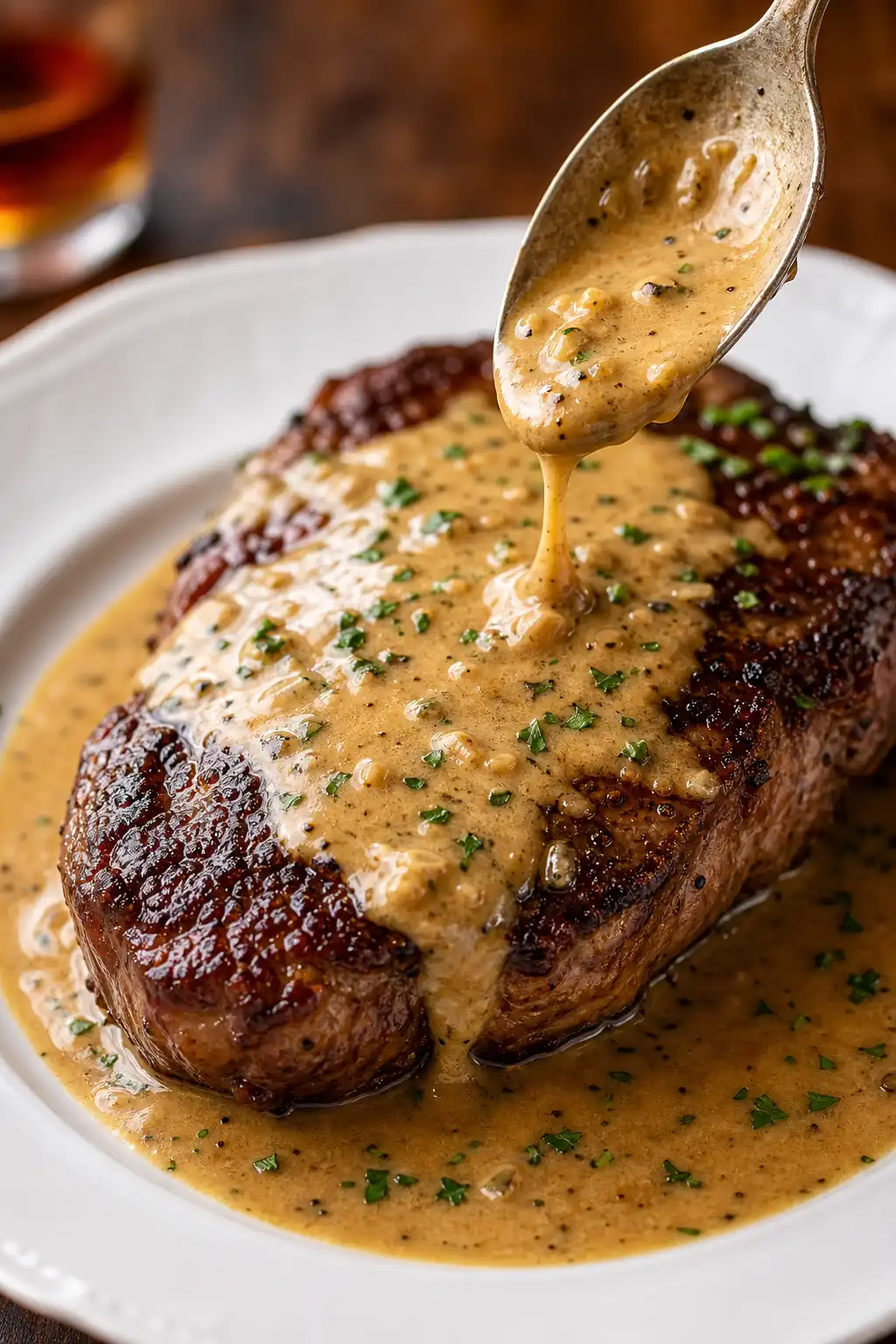
Imagine the rich, velvety embrace of a deeply aromatic sauce—infused with the smoky warmth of aged bourbon, the pungent sweetness of slow-simmered garlic, and the luxurious silkiness of reduced heavy cream—all cascading over a thick-cut, restaurant-quality steak seared to a flawless, caramelized crust with a tender, rosy interior. The Savory Bourbon Garlic Cream Sauce Over Perfectly Seared Steak isn’t just a meal; it’s a culinary crescendo—a harmonious fusion of bold American spirit, rustic French technique, and modern precision grilling. This dish marries the robust char of high-heat searing with the nuanced elegance of a pan reduction, transforming humble pantry staples into an unforgettable centerpiece worthy of special occasions, intimate date nights, or simply a deeply satisfying reward after a long week. More than flavor alone, it embodies balance: the heat of black pepper tamed by cream, the sharpness of raw garlic mellowed by slow cooking, the alcohol’s bite softened and deepened by reduction, and the meat’s natural umami amplified—not masked—by every glossy spoonful.
The History
The origins of this dish are not rooted in a single ancient cookbook or a famed chef’s signature creation, but rather in the beautiful, inevitable evolution of cross-cultural culinary dialogue and American innovation. Its lineage traces back through several key traditions: First, the French pan sauce tradition—where chefs deglaze a hot skillet with wine or stock after searing meat, scraping up the flavorful browned bits (fond) to build depth and complexity. Second, the Southern and Appalachian heritage of bourbon—distilled since the late 18th century in Kentucky—as both a sipping spirit and a revered cooking ingredient, prized for its notes of vanilla, oak, caramel, and spice that add unparalleled warmth and body to savory preparations. Third, the global reverence for garlic as a foundational aromatic, elevated here beyond mere seasoning to a star ingredient through gentle sautéing and slow infusion. The “cream” element reflects classic French crème fraîche or beurre blanc-inspired enrichments, adapted for accessibility and richness using heavy cream. While no single historical document cites this exact combination, food historians note a surge in bourbon-infused savory sauces beginning in the 1980s and 1990s, championed by chefs like Emeril Lagasse (who popularized “Bam!” with bold spirits) and later refined by contemporary steakhouse innovators seeking to move beyond traditional peppercorn or mushroom sauces. Today, it stands as a proudly modern American classic—honoring technique, celebrating regional ingredients, and unapologetically indulgent in its pursuit of layered, resonant flavor.
Ingredients Breakdown
Every component in this sauce and preparation plays a deliberate, synergistic role—no ingredient is merely decorative or filler. Understanding their individual contributions unlocks mastery:
- Steak (Ribeye, New York Strip, or Filet Mignon): Chosen for marbling (intramuscular fat), which renders during searing to baste the meat from within, yielding unmatched juiciness and beefy depth. Ribeye offers the most robust flavor and texture; New York Strip balances tenderness and chew; Filet provides sublime tenderness ideal for showcasing the sauce.
- Kosher Salt & Freshly Ground Black Pepper: Not just seasonings—they’re transformative. Salt draws out surface moisture pre-sear for better crust formation and enhances natural meat flavor at a molecular level. Coarse black pepper adds aromatic heat that complements bourbon’s spice without competing.
- High-Smoke-Point Oil (Avocado, Grapeseed, or Clarified Butter): Essential for achieving the Maillard reaction—the complex chemical process responsible for the steak’s golden-brown, flavorful crust—without burning. Regular butter burns too easily; olive oil’s low smoke point creates acrid bitterness.
- Unsalted Butter: Added *after* searing (during sauce building) for richness, mouthfeel, and emulsification. Its milk solids contribute nutty, caramelized notes when gently cooked into the sauce base.
- Garlic (Fresh, Minced or Thinly Sliced): The aromatic heart. Raw garlic is harsh and sharp; gentle cooking in butter mellows it into sweet, savory, almost umami-rich depth. Using fresh cloves ensures volatile oils are intact—jarred minced garlic lacks nuance and can taste metallic.
- Bourbon (Small-Batch, High-Quality, 80–100 Proof): The soul of the sauce. Choose one with balanced notes—vanilla, caramel, oak, and subtle spice (e.g., Buffalo Trace, Eagle Rare, or Woodford Reserve). Avoid flavored or heavily sweetened bourbons. The alcohol cooks off, leaving behind concentrated, complex flavor compounds that deepen the entire profile.
- Dry Sherry or Dry Vermouth (Optional but Highly Recommended): Adds bright acidity and nutty complexity that cuts through the sauce’s richness and prevents cloying. It bridges the gap between bourbon’s sweetness and cream’s fat, adding dimension sherry vinegar alone cannot provide.
- Beef Stock or Demi-Glace (Low-Sodium, Homemade Preferred): Provides the savory backbone (umami) and body. Homemade stock yields gelatinous richness that helps the sauce cling luxuriously to the steak. Store-bought should be reduced by half first to concentrate flavor and remove excess water.
- Heavy Cream (36–40% Milk Fat): Non-negotiable for texture and stability. Lower-fat creams (half-and-half, whole milk) will curdle or break under heat and reduction. Heavy cream emulsifies beautifully with butter and stock, creating a velvety, cohesive, spoon-coating consistency.
- Fresh Thyme or Rosemary (Sprigs): Earthy, floral herbal notes that complement both beef and bourbon without overpowering. Stems are removed before serving for texture, but infused during cooking.
- Red Wine Vinegar or Fresh Lemon Juice (Finish): A tiny splash added *off-heat* just before serving brightens the entire composition, lifts the fat, and balances the residual sweetness—making each bite taste fresher and more dynamic.
Step-by-Step Recipe
- Prep & Temper the Steak: At least 45 minutes before cooking, remove steak from refrigerator. Pat *extremely* dry with paper towels—moisture is the enemy of crust. Season generously on all sides with kosher salt and freshly ground black pepper. Let sit uncovered at cool room temperature (68–72°F) to equalize internal temperature—this ensures even cooking from edge to center.
- Heat the Pan to Smoking Point: Place a heavy-bottomed stainless steel or cast-iron skillet over medium-high heat for 3–4 minutes. Add 1½ tbsp high-smoke-point oil. Heat until shimmering and just beginning to ripple—almost smoking. A drop of water should instantly vaporize and dance.
- Seal the Crust: Place steak in the pan away from you (to avoid oil splatter). Press gently with a spatula for 1–2 seconds to ensure full contact. Do NOT move it for 2.5–4 minutes (depending on thickness and desired doneness) until a deep mahogany crust forms. Flip once using tongs (never pierce with a fork—juice loss!). Sear second side for same duration. For thicker cuts (1.5″+), sear edges briefly using tongs.
- Rest & Reserve Fond: Transfer steak to a wire rack set over a plate. Tent *loosely* with foil—do not seal tightly, or steam will soften the crust. Rest for *at least* 8–12 minutes (longer for larger cuts). This allows juices to redistribute. Meanwhile, leave pan on stove—do not wash! The dark, sticky bits (fond) are pure flavor gold.
- Build the Aromatic Base: Reduce heat to medium-low. Add 1 tbsp unsalted butter and 3–4 garlic cloves (minced or thinly sliced). Sauté gently for 60–90 seconds until fragrant and softening—but *do not brown or burn*. Garlic burns quickly and turns bitter.
- Flambé or Simmer the Bourbon: Carefully pour in ¼ cup bourbon. If comfortable, tilt pan slightly and ignite with a long match or lighter—let flames burn for 20–30 seconds until subsided, shaking pan gently. (If flambéing isn’t preferred, simmer uncovered for 1.5–2 minutes until raw alcohol smell vanishes and liquid reduces by ~⅓.)
- Add Acid & Depth: Stir in 1 tbsp dry sherry or vermouth and 1 tsp red wine vinegar. Scrape vigorously with a wooden spoon to lift *all* fond from the pan bottom—this is where the magic happens.
- Infuse with Stock: Pour in ¾ cup warmed beef stock (or demi-glace diluted 1:1 with water). Bring to a gentle simmer. Add 1–2 sprigs fresh thyme. Simmer uncovered for 4–6 minutes, reducing by about one-third and intensifying flavor. Skim any foam or excess fat from surface for clarity.
- Emulsify with Cream: Reduce heat to low. Whisk in ½ cup cold heavy cream in a slow, steady stream. Continue whisking constantly as mixture warms and thickens—do not boil vigorously. Simmer gently for 3–5 minutes until sauce coats the back of a spoon (nappe stage) and reduces to ~¾ cup total volume. It should be silky, not thin or separated.
- Finish & Refine: Remove from heat. Stir in remaining 1 tbsp cold unsalted butter—this “monter au beurre” step adds shine, richness, and stabilizes the emulsion. Squeeze in ½ tsp fresh lemon juice or vinegar. Taste and adjust: more salt? A whisper more black pepper? A tiny pinch of grated nutmeg (optional, for warmth)? Strain through a fine-mesh sieve for ultimate silkiness (optional but recommended for formal service).
- Plate with Precision: Slice rested steak against the grain into ½-inch thick pieces. Fan over warm plates. Spoon generous amounts of warm sauce over and around—let some pool naturally. Garnish with flaky sea salt (like Maldon), micro chives, or a twist of lemon zest. Serve immediately.
Tips
- Dryness is Non-Negotiable: Patting steak bone-dry isn’t optional—it’s the single biggest factor in achieving blistering crust. Repeat patting if surface beads moisture again before seasoning.
- Thermometer is Your Truth-Teller: Rely on an instant-read thermometer, not timing alone. Target temps: Rare (120–125°F), Medium-Rare (130–135°F), Medium (140–145°F). Remember: temp rises 5–10°F during resting.
- Cold Cream = Stable Emulsion: Always add chilled heavy cream to warm (not boiling) sauce. Adding warm cream to hot sauce risks breaking; cold cream tempers the heat gradually for smooth integration.
- Scrape Fond Relentlessly: Use the corner of a wooden spoon or flat-edged spatula. Those dark bits hold concentrated meat essence—don’t leave even a speck behind.
- Low & Slow for Garlic: Garlic waits for no one. Cook it just until translucent and fragrant—1 minute max. Burnt garlic ruins the entire sauce’s harmony.
- Warm Your Plates: Stack dinner plates in a low oven (200°F) for 10 minutes before plating. Cold plates chill steak and sauce instantly, dulling flavors and textures.
- Reserve Steak Juices: When resting, let juices collect on the plate. After straining sauce, whisk in 1–2 tsp of these precious juices for an extra layer of beefy intensity.
- Reheat Gently: If making ahead, refrigerate sauce separately. Reheat *very* slowly over lowest heat, whisking constantly. Add a splash of cream or stock if it thickens too much. Never microwave—it causes separation.
- Sauce Consistency Check: Dip a spoon in, remove, and run your finger across the back. If the line holds cleanly without dripping, it’s perfectly reduced.
- Acid Last, Always: Lemon juice or vinegar added at the end preserves its bright, lifting quality. Adding it early cooks off the volatile citrus notes, leaving only sourness.
Variations and Customizations
This recipe is a masterful canvas—adaptable to dietary needs, seasonal produce, pantry constraints, and personal taste. Here’s how to make it uniquely yours:
- Vegetarian/Vegan Adaptation: Replace steak with thick-cut grilled portobello caps or seared king oyster mushrooms. Use vegan butter, full-fat coconut cream (chilled, solid part only), and mushroom or vegetable stock. Boost umami with 1 tsp tamari or soy sauce and a pinch of nutritional yeast.
- Gluten-Free Assurance: Naturally GF—just verify bourbon (most are, but avoid flavored varieties with gluten additives) and stock (many store-bought contain wheat-derived hydrolyzed protein). Opt for certified GF brands like Pacific or Swanson GF.
- Lower-Fat Option: Substitute half the heavy cream with full-fat Greek yogurt (stirred in *off-heat* at the very end) for tang and creaminess with less saturated fat. Note: do not boil yogurt or it will curdle.
- Herb Garden Twist: Swap thyme for 1 tsp finely chopped fresh rosemary (add earlier to mellow its pine intensity) or 1 tbsp chopped tarragon (add at the end for anise-like brightness that pairs beautifully with beef).
- Umami Bomb Upgrade: Add 1 tsp tomato paste with the garlic, cooking 30 seconds to caramelize. Or stir in ½ tsp fish sauce (yes, really!) at the finish—undetectable as “fish,” but adds profound savory depth.
- Spice Infusion: For a subtle kick, add ¼ tsp crushed red pepper flakes with the garlic, or finish with a few drops of high-quality chili crisp oil.
- Smoky Dimension: Add ¼ tsp smoked paprika with the garlic, or use a touch of chipotle in adobo (minced fine) for smoky heat and complexity.
- Seasonal Fruit Accent: In fall, stir in 2 tbsp finely diced roasted pear or apple with the stock. In summer, add 1 tbsp blackberry or cherry jam with the cream for a hint of fruit-forward elegance.
- Wine Swap Alternative: No bourbon? Substitute with ¼ cup rye whiskey (spicier, drier) or aged dark rum (richer, molasses notes). Avoid vodka or gin—their neutral or botanical profiles won’t complement beef.
- Quick Weeknight Version: Use pre-minced garlic (though fresh is superior), low-sodium store-bought beef broth, and skip flambé—simmer bourbon 3 minutes longer. Still delicious in under 30 minutes.
Health Considerations and Nutritional Value
While undeniably indulgent, this dish can be part of a balanced, mindful eating pattern when understood contextually. Let’s demystify its nutritional profile and address common concerns:
- Caloric Density & Portion Awareness: A 6-oz grilled ribeye contains ~350–400 calories, primarily from high-quality protein and monounsaturated fats (oleic acid). The sauce adds ~250–300 calories per ¼-cup serving (from cream, butter, bourbon’s residual sugars). Mindful portioning—6 oz steak + 3 tbsp sauce—is satisfying without excess. Pair with voluminous non-starchy vegetables (roasted asparagus, garlic sautéed spinach, grilled zucchini) to increase fiber and nutrient density without adding significant calories.
- Bourbon’s Role: Pure distilled spirits like bourbon contain zero carbs, sugar, or fat. The trace residual sugars come from barrel aging (caramelized wood sugars), not added sugar. Moderate consumption (one standard drink: 1.5 oz) has been associated in some studies with potential cardiovascular benefits due to polyphenols like ellagic acid—but excessive intake negates any benefit. In cooking, >95% of alcohol evaporates, leaving flavor compounds, not intoxicating effects.
- Garlic’s Science-Backed Benefits: Rich in allicin (activated when crushed/chopped and allowed to rest 10 minutes pre-cook), garlic offers potent anti-inflammatory, antimicrobial, and cardiovascular-supportive properties—including mild blood-pressure-lowering and cholesterol-modulating effects.
- Cream & Saturated Fat Context: Heavy cream contains saturated fat, historically linked to heart disease—but modern nutrition science emphasizes *food matrix* and *overall dietary pattern*. The saturated fat in dairy is accompanied by calcium, vitamin K2 (in grass-fed), and beneficial fatty acids like butyrate. Enjoyed occasionally as part of a diet rich in plants, fiber, and omega-3s, it poses minimal risk for most healthy individuals.
- Sodium Management: Most sodium comes from added salt—not the bourbon or stock. Control it precisely: use kosher salt (less dense than table salt), measure, and rely on herbs/spices for flavor. Opt for low-sodium stock to reduce hidden sodium by up to 60%.
- Protein Powerhouse: Steak provides complete, highly bioavailable protein (all 9 essential amino acids), crucial for muscle maintenance, satiety, and metabolic health. The sauce’s fat slows gastric emptying, promoting prolonged fullness and stable blood sugar.
- Who Might Modify: Those with GERD may find high-fat sauces trigger reflux—reduce cream to ¼ cup and add 1 tbsp Dijon mustard for emulsification and tang. Individuals managing diabetes should focus on portion control and pair with high-fiber sides to moderate glucose response. Always consult a registered dietitian for personalized guidance.
Ingredients
- 1 (12–16 oz) boneless ribeye, New York strip, or filet mignon steak (1–1.5 inches thick)
- 2 tsp kosher salt, plus more for finishing
- 1½ tsp freshly ground black pepper, plus more for finishing
- 1½ tbsp high-smoke-point oil (avocado, grapeseed, or clarified butter)
- 2 tbsp unsalted butter, divided
- 4 large garlic cloves, minced or thinly sliced
- ¼ cup high-quality bourbon (80–100 proof)
- 1 tbsp dry sherry or dry vermouth
- 1 tsp red wine vinegar
- ¾ cup low-sodium beef stock or demi-glace (warmed)
- ½ cup cold heavy cream (36–40% fat)
- 1–2 sprigs fresh thyme
- ½ tsp fresh lemon juice or additional red wine vinegar
- Flaky sea salt (e.g., Maldon) and micro chives for garnish
Directions
- Remove steak from refrigerator 45 minutes before cooking. Pat *extremely* dry with paper towels. Season liberally on all sides with 2 tsp kosher salt and 1½ tsp black pepper. Let sit uncovered at room temperature.
- Heat a heavy skillet (stainless or cast iron) over medium-high heat for 3–4 minutes. Add 1½ tbsp high-smoke-point oil; heat until shimmering and nearly smoking.
- Place steak in hot pan. Press gently for 1–2 seconds. Do not move for 2.5–4 minutes until a deep crust forms. Flip and sear second side for same time. For thick steaks, sear edges 30 seconds each. Transfer to wire rack; tent loosely with foil. Rest 8–12 minutes. Reserve pan.
- Reduce heat to medium-low. Add 1 tbsp butter and minced garlic to reserved pan. Sauté 60–90 seconds until fragrant and soft—do not brown.
- Carefully pour in bourbon. Flambé (if desired) or simmer 1.5–2 minutes until alcohol smell dissipates and liquid reduces by ⅓.
- Add sherry and red wine vinegar. Scrape pan vigorously with wooden spoon to lift all fond.
- Pour in warmed beef stock and add thyme sprigs. Simmer 4–6 minutes until reduced by ⅓ and flavorful.
- Reduce heat to low. Whisk in cold heavy cream slowly. Simmer gently 3–5 minutes until thickened to coat spoon (nappe stage).
- Remove from heat. Whisk in remaining 1 tbsp cold butter and ½ tsp lemon juice. Taste and adjust seasoning. For silkiness, strain through fine-mesh sieve.
- Slice rested steak against the grain. Plate. Spoon warm sauce generously over and around. Garnish with flaky salt and chives. Serve immediately.
FAQ
- Can I make this sauce ahead of time?
- Absolutely. Prepare sauce up to 3 days ahead. Cool completely, then refrigerate in an airtight container. Reheat *very gently* over low heat, whisking constantly. Add a splash of cream or stock if too thick. Do not boil.
- What if my sauce breaks or looks greasy?
- It likely got too hot or wasn’t whisked enough. Immediately remove from heat. Whisk in 1 tsp cold heavy cream or cold butter, ½ tsp at a time, until re-emulsified. A blender pulse (briefly!) can also rescue it.
- Is there a substitute for bourbon if I don’t cook with alcohol?
- Yes. Use ¼ cup strong brewed coffee + 1 tsp pure maple syrup + ¼ tsp vanilla extract. It mimics bourbon’s depth and sweetness without alcohol. Alternatively, use apple cider vinegar + a pinch of smoked paprika for complexity.
- Why do I need to rest the steak?
- Resting allows muscle fibers to relax and reabsorb juices. Cutting too soon releases up to 40% of its moisture onto the plate, leaving the steak dry. Resting ensures every slice is succulent.
- Can I use frozen steak?
- For best results, thaw steak slowly in the refrigerator overnight. Never cook frozen steak for this recipe—it won’t develop proper crust and will steam instead of sear.
- My garlic burned! Can I save the sauce?
- If only lightly browned, proceed—flavor may be stronger but still usable. If blackened and acrid, discard the base and start over with fresh garlic and butter. Burnt garlic cannot be masked.
- What sides pair best with this dish?
- Classic pairings: creamy horseradish mashed potatoes, roasted root vegetables (carrots, parsnips), garlicky sautéed spinach, or a crisp green salad with sherry vinaigrette. Avoid overly rich sides—let the steak and sauce shine.
- Can I freeze the sauce?
- Yes, but with caveats. Freeze *without* the final butter and lemon juice. Thaw overnight in fridge, reheat gently, then whisk in cold butter and acid. Cream-based sauces may separate slightly upon freezing but usually re-emulsify well.
- Is this sauce gluten-free?
- Yes—if you use certified gluten-free bourbon and stock. Many bourbons are naturally GF (distillation removes gluten proteins), but always check labels for flavored varieties or malt-based additives.
- How do I know when the sauce is done reducing?
- Perform the “spoon test”: Dip a spoon in sauce, remove, and run your finger across the back. If the line holds clean without dripping, it’s perfectly reduced. It should coat the spoon thickly and slowly drip—not run.
Summary
The Savory Bourbon Garlic Cream Sauce Over Perfectly Seared Steak is a masterclass in balancing bold American spirit, slow-cooked aromatic depth, and luxurious French-inspired technique—transforming premium beef into an unforgettable, restaurant-worthy experience in your own kitchen. Every step, from precise dry-brining and high-heat searing to the careful reduction of bourbon, garlic, and cream, is designed to amplify natural umami, create textural contrast, and deliver harmonious, resonant flavor that lingers long after the last bite.
Whether you’re celebrating a milestone, impressing guests, or simply treating yourself to profound culinary satisfaction, this dish rewards attention to detail with extraordinary results—proving that indulgence and artistry are not just compatible, but essential partners in truly exceptional home cooking.