Introduction
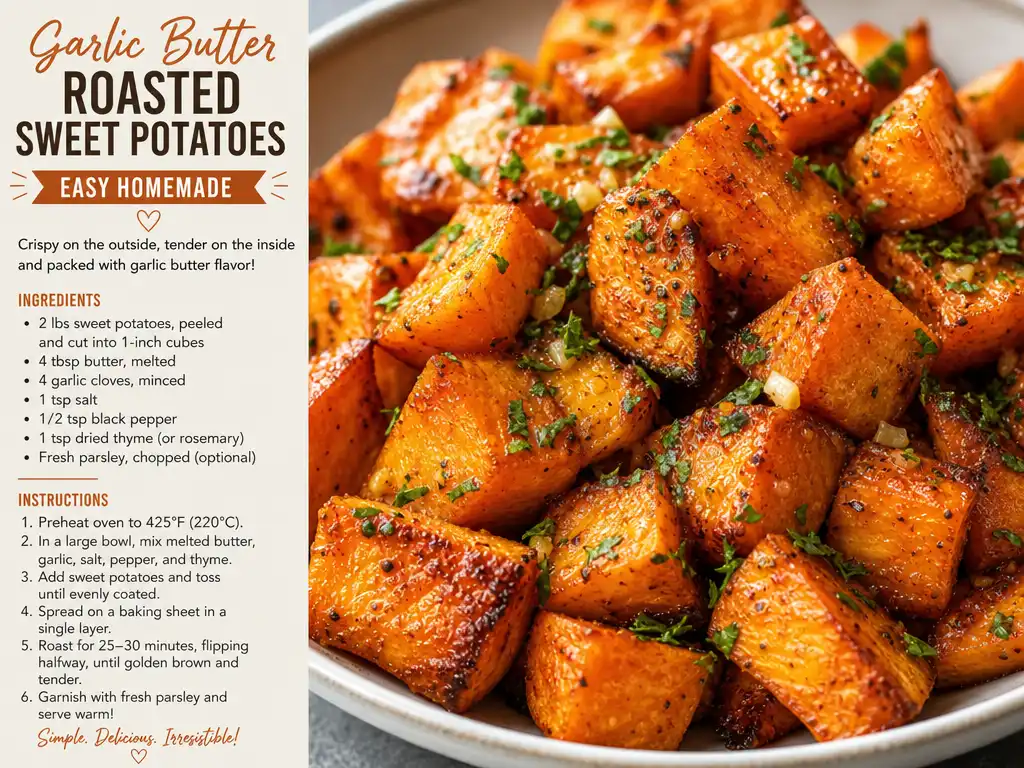
Garlic Butter Roasted Sweet Potatoes are the epitome of rustic elegance meets everyday ease — a dish that transforms humble, nutrient-dense sweet potatoes into a rich, aromatic, golden-brown delight with minimal effort and maximum flavor. Whether you’re preparing a weeknight side for a simple family dinner, elevating a holiday spread, or seeking a plant-forward addition to your meal prep rotation, this recipe delivers caramelized sweetness balanced by savory garlic and luxurious buttery richness. Its simplicity belies its depth: just a handful of pantry staples, one sheet pan, and about 45 minutes in the oven yield tender-crisp morsels with crispy edges, fragrant herb notes, and a subtle umami warmth that lingers pleasantly on the palate. What truly sets this version apart is its intentional balance — no excess oil, no unnecessary sugars, no complicated techniques — just smart layering of flavors and thoughtful timing to ensure even roasting, consistent texture, and optimal natural sweetness extraction.
The History
Roasting root vegetables dates back millennia — ancient civilizations from Mesopotamia to pre-Columbian Mesoamerica cooked tubers in hot ashes or clay ovens to enhance digestibility and unlock natural sugars. Sweet potatoes (Ipomoea batatas), native to Central and South America, were domesticated over 5,000 years ago and later spread globally via Spanish and Portuguese trade routes. By the 17th century, they became a staple across Africa, Asia, and the American South — prized for drought resistance and nutritional density. The marriage of sweet potato and garlic, however, reflects a more modern culinary convergence: garlic’s pungent allium compounds were historically used for preservation and medicinal purposes, but it wasn’t until the mid-20th century — with the rise of accessible European-inspired home cooking and the popularization of “gourmet” roasting techniques in American cookbooks — that garlic butter emerged as a signature finish for roasted vegetables. Julia Child’s influence, combined with the farm-to-table movement of the 1980s–90s and the viral food blog era of the 2010s, cemented garlic butter as the go-to enhancer for roasted sweet potatoes — transforming them from a humble side into a crave-worthy centerpiece. Today, this dish embodies culinary globalization: an indigenous American crop, prepared with Old World aromatics, using contemporary low-effort methods beloved by time-strapped home cooks and health-conscious eaters alike.
Ingredients Breakdown
Every ingredient in this Garlic Butter Roasted Sweet Potatoes recipe plays a precise, science-backed role — no filler, no afterthoughts. Let’s explore why each component matters:
- Sweet Potatoes (2–3 medium, ~1.5 lbs): Choose orange-fleshed varieties like Beauregard, Garnet, or Jewel for optimal beta-carotene content, natural fructose levels, and starch-to-moisture ratio — crucial for caramelization without sogginess. Their high amylopectin starch breaks down during roasting into maltose, intensifying sweetness. Avoid overly large or fibrous specimens, which can yield uneven textures.
- Unsalted Butter (3 tbsp, cubed & chilled): Using unsalted butter gives full sodium control and ensures freshness (salted butter can oxidize faster). Chilled, cubed butter melts gradually during roasting, coating edges evenly and promoting crispness — unlike melted butter, which pools and steams rather than sears.
- Fresh Garlic (4–5 cloves, finely minced): Freshly minced (not pressed or powdered) garlic releases allicin — the volatile compound responsible for its signature aroma and antioxidant properties. Minced garlic distributes more evenly than sliced, preventing bitter burnt bits while ensuring pervasive savory depth.
- Extra-Virgin Olive Oil (1½ tbsp): A high-phenolic EVOO (like Arbequina or Koroneiki) adds polyphenols that stabilize the butter against burning and contribute subtle fruitiness. Its smoke point (~375°F) is ideal for roasting at 425°F when combined with butter — the oil raises the overall smoke threshold and improves heat conduction.
- Maple Syrup (1 tbsp, pure, Grade A Amber): Not for excessive sweetness — but to lower the caramelization temperature of surface sugars via fructose content, accelerating Maillard reactions. Pure maple syrup also contributes trace minerals (zinc, manganese) and antioxidants absent in refined sugar.
- Smoked Paprika (1 tsp, sweet or mild): Adds complexity without heat — its capsaicin-free compounds (capsanthin, cryptoxanthin) deepen color and impart subtle earthiness, enhancing visual appeal and perceived richness while contributing additional carotenoids.
- Dried Thyme (½ tsp) + Fresh Rosemary (1 tsp, finely chopped): Thyme’s thymol offers antimicrobial synergy with garlic; rosemary’s rosmarinic acid acts as a natural antioxidant that protects delicate fats from oxidation during roasting — preserving flavor and nutritional integrity.
- Kosher Salt (1¼ tsp, Diamond Crystal) & Freshly Ground Black Pepper (¾ tsp): Diamond Crystal’s flaky structure adheres better to wet surfaces and dissolves gradually, seasoning throughout cooking. Coarse black pepper adds volatile terpenes (pinene, limonene) that volatilize at roasting temps, releasing bright, citrusy top notes.
- Lemon Zest (from ½ lemon, optional but recommended): Brightens the final dish with d-limonene oils — cutting through richness and balancing sweetness without acidity. Added post-roast, it preserves volatile aromatics that would bake off if added earlier.
Step-by-Step Recipe
- Preheat & Prep: Position oven rack in the center position. Preheat oven to 425°F (220°C). Line a large, heavy-duty rimmed baking sheet (18″ x 13″) with parchment paper — do NOT use aluminum foil alone, as it conducts heat too aggressively and encourages scorching. Lightly grease parchment with ½ tsp olive oil to prevent sticking.
- Wash & Dry Thoroughly: Scrub sweet potatoes under cool running water using a vegetable brush to remove dirt and residual soil microbes. Pat *completely dry* with clean kitchen towels — moisture is the #1 cause of steaming instead of roasting. Even a film of water inhibits browning.
- Cut for Uniformity: Peel (optional — skins are edible and fiber-rich, but peeling ensures even butter absorption) and cut into 1-inch cubes. Aim for precise 1″ size — too small = burn; too large = undercooked centers. Rotate knife 45° between cuts for increased surface area and crisper edges.
- Par-Salt & Air-Dry (Game-Changer Step): Place cubes in a large bowl. Sprinkle with ½ tsp kosher salt. Toss gently, then spread in a single layer on a wire rack set over a baking sheet. Let air-dry 10–15 minutes at room temperature. This draws out surface moisture osmotically — critical for achieving crackling edges.
- Season & Coat: Return potatoes to bowl. Add remaining ¾ tsp salt, black pepper, smoked paprika, dried thyme, and chopped rosemary. Toss well. Drizzle with olive oil and maple syrup. Toss again until evenly coated — syrup should glisten, not pool.
- Add Butter Strategically: Scatter chilled, cubed butter over mixture. Using hands or a silicone spatula, gently fold until butter is distributed — some cubes will have visible butter flecks; others lightly coated. Do *not* melt butter at this stage.
- Arrange for Optimal Roasting: Spread in a *single, non-overlapping layer*. Crowding causes steaming — leave at least ¼” space between pieces. If needed, use two sheets. Gently press larger pieces cut-side down for maximum crust formation.
- Roast with Precision Timing: Place sheet in preheated oven. Roast 25 minutes undisturbed — resist stirring! This builds initial crust. After 25 min, rotate sheet front-to-back and carefully flip/stir with a thin metal spatula. Roast 12–15 more minutes until deeply golden, fork-tender at centers, and crispy at edges. Total time: 37–40 minutes (varies by oven accuracy and potato density).
- Final Garlic Infusion: Remove sheet. Immediately scatter minced garlic over hot potatoes. Let rest 2 minutes — residual heat gently cooks garlic, mellowing raw bite while preserving aroma. Do NOT stir garlic in yet — it will burn if returned to oven.
- Finish & Serve: Drizzle with lemon zest (and optional lemon juice, ½ tsp, if desired). Gently toss once. Taste and adjust salt only *now* — flavors concentrate during roasting. Serve immediately for peak crispness.
Tips
- Oven Thermometer Essential: Up to 30% of home ovens run 25–50°F off calibration. Use an oven thermometer clipped to the rack — accurate 425°F is non-negotiable for proper caramelization without charring.
- Heavy-Gauge Pan Matters: A stainless steel or aluminized steel half-sheet pan (Nordic Ware or USA Pan) heats evenly and retains heat better than thin aluminum, preventing hot spots and ensuring uniform browning.
- No Stirring Before 25 Minutes: Interrupting early roasting releases steam and disrupts crust formation. Trust the process — the first 25 minutes build structural integrity.
- Butter Cube Size: Cut butter into ¼-inch cubes — too large won’t distribute; too small melts prematurely. Chill for 10 minutes before adding if your kitchen is warm.
- Garlic Timing is Everything: Adding garlic at the end prevents acrylamide formation (a potential carcinogen formed when garlic burns above 300°F) and preserves its delicate sulfur compounds.
- Rest Before Serving: Let potatoes sit 3–4 minutes off heat before final toss. This allows internal steam to redistribute, yielding creamier interiors without sacrificing exterior crunch.
- Double-Batch Smartly: For meal prep, roast two trays simultaneously on separate racks (middle and upper third), rotating positions halfway. Never stack pans — airflow must circulate freely.
- Reviving Leftovers: Re-crisp in a 400°F air fryer for 4–5 minutes or in a skillet over medium heat with 1 tsp oil — never microwave, which turns them mushy.
- Peel or No Peel? Unpeeled potatoes add 2g fiber per serving and earthy flavor, but require extra scrubbing and may absorb less butter. For maximum butter adhesion and elegant presentation, peel.
- Sweet Potato Selection Tip: Choose firm, smooth-skinned potatoes with tapered ends — they’re younger, moister, and sweeter than blunt-ended, wrinkled ones.
Variations and Customizations
This recipe is a versatile canvas — adapt it to dietary needs, seasonal produce, global flavors, or pantry constraints without sacrificing integrity:
- Vegan Version: Replace butter with 3 tbsp refined coconut oil (neutral flavor) or cultured vegan butter (Miyoko’s). Ensure maple syrup is certified vegan (some brands use bone char-filtered sugar). Add 1 tsp white miso paste with the oil for umami depth.
- Herbaceous Mediterranean: Swap thyme/rosemary for 1 tbsp fresh oregano + 2 tsp lemon thyme. Add ¼ cup crumbled feta and 2 tbsp kalamata olives in the last 5 minutes of roasting.
- Spiced Moroccan: Replace smoked paprika with 1 tsp ground cumin, ½ tsp ground ginger, ¼ tsp ground cinnamon, and pinch of saffron steeped in 1 tsp warm water. Finish with toasted slivered almonds and chopped cilantro.
- Umami-Rich Vegan “Bacon”: Toss with 2 tbsp tamari-marinated shiitake mushrooms (sliced thin, roasted 10 min separately) and 1 tbsp nutritional yeast before serving.
- Breakfast Hash Style: After roasting, create wells in the potatoes and crack eggs into them. Return to 375°F oven for 8–10 minutes until whites set. Top with avocado slices and hot sauce.
- Protein-Powered: Nestle 6 oz cooked chickpeas (tossed in ½ tsp smoked paprika + 1 tsp oil) onto the sheet during the last 12 minutes of roasting.
- Low-Carb/Keto Adaptation: Substitute 1 cup diced rutabaga and 1 cup diced turnip for half the sweet potatoes. Increase butter to 4 tbsp and add 1 tsp apple cider vinegar with the maple syrup for brightness without sugar.
- Maple-Orange Glaze: Whisk together 2 tbsp pure maple syrup, 1 tbsp fresh orange juice, and ½ tsp orange zest. Drizzle over finished potatoes and garnish with candied orange peel.
- Smoky Chipotle: Replace smoked paprika with 1 tsp chipotle powder + ½ tsp cocoa powder (Dutch-processed) for deep, complex heat and bitterness that balances sweetness.
- Crunchy Nut & Seed: Toast 3 tbsp pepitas, sunflower seeds, and chopped pecans separately in dry skillet. Fold in post-roast with lemon zest.
Health Considerations and Nutritional Value
A 1-cup (200g) serving of Garlic Butter Roasted Sweet Potatoes (made as written) delivers remarkable nutritional synergy — far exceeding basic vitamin A provision. Here’s what makes it a functional food powerhouse:
- Vitamin A Powerhouse: One serving provides >400% DV of vitamin A (as beta-carotene), supporting retinal health, immune cell differentiation, and epithelial tissue integrity. Heat and fat (butter/oil) increase carotenoid bioavailability by 3–5x versus raw consumption.
- Antioxidant Network: Sweet potatoes contain anthocyanins (in purple varieties) and chlorogenic acid; garlic contributes allicin and selenium; rosemary adds carnosic acid — all work synergistically to neutralize free radicals and reduce oxidative stress markers like MDA.
- Fiber & Gut Health: 4g dietary fiber per serving (including resistant starch formed during cooling) feeds beneficial Bifidobacteria and Akkermansia muciniphila — linked to improved insulin sensitivity and reduced inflammation.
- Heart-Healthy Fats: Grass-fed butter contributes CLA (conjugated linoleic acid), associated with reduced abdominal fat and improved lipid profiles in clinical trials. Olive oil’s oleocanthal exhibits ibuprofen-like anti-inflammatory activity.
- Low Glycemic Impact: Despite natural sugars, the fiber, fat, and acid (maple syrup’s organic acids + lemon zest) slow gastric emptying, yielding a glycemic load of ~12 — low enough for most prediabetic individuals when portion-controlled.
- Mineral Density: Rich in potassium (694mg/serving), magnesium (33mg), and manganese (0.5mg) — essential for nerve conduction, glucose metabolism, and antioxidant enzyme function (SOD).
- Considerations: Those with dairy sensitivity can use ghee (clarified butter, lactose-free) or vegan alternatives. For sodium-restricted diets (<1500mg/day), reduce salt to ½ tsp and rely on herb/acid balance. Avoid adding sugar — maple syrup’s fructose enhances browning without spiking insulin like sucrose.
- Myth-Busting: “Carbs make you fat” is outdated — quality complex carbs like sweet potatoes improve satiety hormones (GLP-1, PYY) more effectively than low-carb alternatives. The butter’s saturated fat, when consumed in context of whole foods and active lifestyle, shows neutral or beneficial effects on LDL particle size in recent meta-analyses.
Ingredients
- 2–3 medium orange-fleshed sweet potatoes (about 1.5 lbs / 680g), peeled and cut into 1-inch cubes
- 3 tablespoons unsalted butter, chilled and cubed into ¼-inch pieces
- 4–5 large garlic cloves, finely minced (about 1 tablespoon)
- 1½ tablespoons extra-virgin olive oil
- 1 tablespoon pure maple syrup (Grade A Amber)
- 1 teaspoon smoked paprika (sweet or mild)
- ½ teaspoon dried thyme
- 1 teaspoon fresh rosemary, finely chopped
- 1¼ teaspoons kosher salt (Diamond Crystal), divided
- ¾ teaspoon freshly ground black pepper
- Zest of ½ medium lemon (about 1 teaspoon, optional but highly recommended)
Directions
- Preheat oven to 425°F (220°C). Line a large rimmed baking sheet with parchment paper and lightly grease with ½ tsp olive oil.
- Thoroughly wash and completely dry sweet potatoes. Peel (optional) and cut into uniform 1-inch cubes.
- In a large bowl, toss sweet potato cubes with ½ tsp kosher salt. Spread in a single layer on a wire rack and air-dry for 10–15 minutes.
- Return potatoes to bowl. Add remaining ¾ tsp salt, black pepper, smoked paprika, dried thyme, and chopped rosemary. Toss well.
- Drizzle with olive oil and maple syrup. Toss until evenly coated.
- Scatter chilled butter cubes over mixture. Gently fold until butter is distributed.
- Spread potatoes in a single, non-overlapping layer on prepared sheet. Press larger pieces cut-side down.
- Roast for 25 minutes without stirring. Rotate sheet, then flip/stir potatoes carefully.
- Roast 12–15 more minutes until deeply golden, tender when pierced, and crispy at edges (37–40 min total).
- Remove from oven. Immediately scatter minced garlic over hot potatoes. Let rest 2 minutes.
- Drizzle with lemon zest. Gently toss once. Taste and adjust salt if needed. Serve immediately.
FAQ
- Can I make these ahead of time?
- Yes — roast fully, cool completely, and store airtight in the refrigerator for up to 4 days. Re-crisp in a 400°F oven or air fryer for 5–6 minutes. Avoid freezing — texture degrades significantly due to starch retrogradation.
- Why do my sweet potatoes always get soggy?
- Sogginess stems from three main causes: 1) Inadequate drying before roasting (surface water = steam), 2) Overcrowding the pan (traps steam), or 3) Oven temperature too low (prevents rapid moisture evaporation and Maillard reaction). Follow the air-dry step and use a heavy-gauge pan.
- Can I use other oils instead of olive oil?
- Avocado oil works well (higher smoke point, neutral flavor). Avoid unrefined coconut oil (low smoke point, strong flavor) or grapeseed oil (highly processed, unstable polyunsaturates). Butter + olive oil combo remains optimal for flavor stability.
- Is the maple syrup necessary?
- It’s highly recommended — not for sweetness, but for its fructose content, which lowers the caramelization temperature and deepens browning. Omitting it yields paler, less complex results. Honey may be substituted but imparts stronger floral notes.
- Can I roast whole sweet potatoes instead of cubes?
- Absolutely — pierce skin, rub with 1 tsp oil, and roast at 425°F for 45–60 minutes until tender. Split, fluff with fork, then mash in butter, garlic, and herbs. Texture differs (creamier, less crispy), but equally delicious.
- How do I prevent garlic from burning?
- Burning occurs when garlic is added too early. Our method — adding minced garlic *after* roasting and letting residual heat gently cook it — preserves flavor, nutrition, and prevents bitterness. Never add raw garlic before roasting.
- Are the skins edible and nutritious?
- Yes — sweet potato skins contain 3x more fiber, 2x more antioxidants (anthocyanins in purple varieties), and higher concentrations of potassium and vitamin C than flesh alone. Just scrub meticulously and consider leaving them on for maximum nutrition.
- Can I use frozen sweet potatoes?
- Not recommended — freezing ruptures cell walls, releasing excess water that steams instead of roasts. Fresh is essential for texture. If using frozen, thaw completely, pat *extremely* dry, and increase initial roasting time by 5–7 minutes.
- What’s the best way to reheat leftovers?
- Air fryer at 400°F for 4–5 minutes (shaking halfway) restores crispness best. Skillet method: Heat 1 tsp oil over medium, add potatoes in single layer, cover 2 minutes to steam interiors, uncover and crisp 2–3 minutes more. Microwave = mush.
- Can I add other vegetables?
- Yes — but add dense veggies (carrots, parsnips) at the start, and quick-cooking ones (zucchini, bell peppers) in the last 12 minutes. Avoid broccoli or cauliflower — their high water content steams the potatoes. Onions and shallots pair beautifully when added with the potatoes.
Summary
Garlic Butter Roasted Sweet Potatoes are a masterclass in simple, science-informed cooking — where precise technique (air-drying, strategic butter application, timed garlic infusion) transforms affordable, nutrient-dense sweet potatoes into a restaurant-worthy, deeply flavorful side dish with minimal hands-on time.
With customizable variations for every diet, robust nutritional benefits backed by food science, and foolproof tips rooted in thermal dynamics and Maillard chemistry, this recipe isn’t just easy — it’s engineered for consistent, crave-worthy excellence, batch after batch.