Introduction
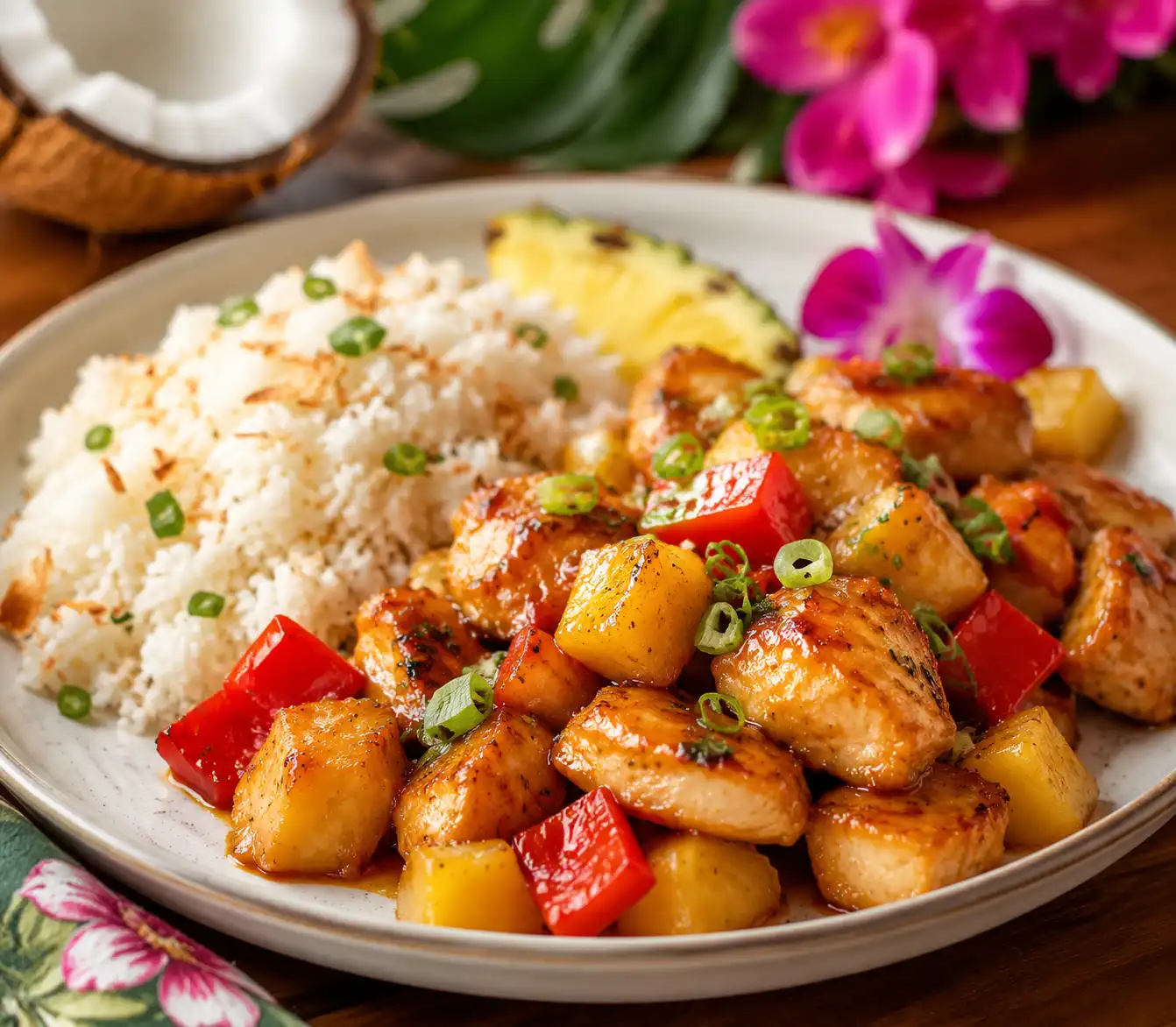
Welcome to a taste of paradise on your dinner plate! Hawaiian Chicken with Coconut Rice is more than just a meal—it’s a vibrant, aromatic escape to sun-drenched beaches and swaying palm trees. This healthy tropical dinner harmoniously blends tender, naturally sweet grilled or baked chicken marinated in zesty pineapple, tangy lime, and fragrant ginger with creamy, subtly sweet coconut rice infused with turmeric, lemongrass, and toasted coconut flakes. Designed with wellness in mind, it skips heavy creams and refined sugars while maximizing whole-food ingredients, plant-based fats, and antioxidant-rich spices. Whether you’re meal prepping for the week, hosting a relaxed summer gathering, or simply craving something nourishing yet indulgent, this dish delivers bold island flavor without compromise—proving that “tropical” and “nutritious” go hand in hand.
The History
Hawaiian Chicken, though widely associated with the Aloha State, is actually a delicious example of culinary fusion rather than a centuries-old indigenous tradition. Its roots trace back to mid-20th-century American kitchens, where home cooks began experimenting with newly accessible tropical ingredients—especially canned pineapple—following Hawaii’s 1959 statehood and the rise of tiki culture. The iconic sweet-and-tangy glaze (often featuring brown sugar, soy sauce, vinegar, and pineapple juice) evolved from teriyaki-inspired preparations brought by Japanese immigrants to Hawaii’s sugar plantations, later adapted by mainland chefs seeking exotic flair. Meanwhile, coconut rice has ancient origins across Southeast Asia, Polynesia, and the Caribbean—where coconut milk has long been used to enrich rice, enhance digestibility, and add satiating medium-chain triglycerides (MCTs). In modern Hawaiian cuisine, coconut rice appears in dishes like *poi* accompaniments and luau feasts, symbolizing abundance and connection to the land and sea. Our version respectfully honors these global influences while reimagining them through a contemporary, health-forward lens—prioritizing organic pineapple, low-sodium tamari, cold-pressed coconut milk, and heirloom brown rice for deeper fiber and micronutrient density.
Ingredients Breakdown
Every ingredient in this recipe was chosen for both flavor integrity and functional nutrition:
- Pineapple (fresh or unsweetened frozen): A rich source of bromelain—an enzyme that aids protein digestion and reduces inflammation—plus vitamin C, manganese, and dietary fiber. Fresh pineapple adds brightness and natural sweetness, eliminating the need for added sugars.
- Chicken breast or boneless, skinless thighs: Lean, high-quality poultry provides complete protein (26g per 4 oz serving) and essential B vitamins. Thighs offer more monounsaturated fat and moisture; breasts deliver lower calories and higher protein density—both are excellent choices depending on preference.
- Light coconut milk (canned, BPA-free): Contains heart-healthy lauric acid and MCTs shown to support metabolic function and sustained energy. We use “light” to reduce saturated fat while retaining creaminess and tropical aroma—no artificial thickeners or gums.
- Short-grain brown rice or black rice: High-fiber, low-glycemic alternatives to white rice. Brown rice offers selenium, magnesium, and gamma-oryzanol (a compound supporting cholesterol balance); black rice adds anthocyanins—the same powerful antioxidants found in blueberries and blackberries.
- Fresh aromatics (ginger, garlic, shallots, lemongrass): Packed with anti-inflammatory compounds like gingerol and allicin, plus immune-modulating polysaccharides. Lemongrass contributes citral, shown in studies to promote relaxation and digestive ease.
- Lime juice and zest: Enhances iron absorption from plant foods (like spinach garnish), delivers bioflavonoids, and balances richness with acidity—critical for palate cleansing and metabolic signaling.
- Toasted unsweetened coconut flakes: Adds crunch, fiber, and lauric acid. Toasting unlocks nutty depth and improves shelf life without oils or preservatives.
- Low-sodium tamari or coconut aminos: A fermented, gluten-free soy alternative rich in probiotics and umami—reducing sodium by up to 40% compared to conventional soy sauce while enhancing savory complexity.
- Organic turmeric and black pepper: Turmeric’s curcumin is notoriously poorly absorbed alone—but paired with piperine from black pepper, bioavailability increases by 2,000%. This duo offers potent anti-inflammatory and neuroprotective benefits.
- Extra-virgin olive oil or avocado oil: Used sparingly for searing—providing polyphenols, oleic acid, and heat-stable monounsaturated fats ideal for medium-heat cooking.
Step-by-Step Recipe
- Prep the marinade (30 minutes ahead): In a blender or food processor, combine 1 cup fresh pineapple chunks, 3 tbsp fresh lime juice, 1 tbsp grated ginger, 2 minced garlic cloves, 1 finely chopped shallot, 1 tbsp low-sodium tamari, 1 tsp coconut aminos, ½ tsp ground turmeric, ¼ tsp freshly cracked black pepper, and a pinch of red pepper flakes (optional). Blend until smooth. Strain through a fine-mesh sieve to remove fibrous bits—reserving both liquid marinade and pulp for later use.
- Marinate the chicken: Place 1.5 lbs boneless, skinless chicken breasts or thighs in a glass or ceramic bowl. Pour marinade over evenly, turning to coat. Cover and refrigerate for at least 1 hour—or ideally 4–6 hours (do not exceed 12 hours for breasts, as acidity can begin to “cook” the surface).
- Toast the coconut: In a dry skillet over medium-low heat, toast ⅓ cup unsweetened shredded coconut, stirring constantly, until golden and fragrant (3–4 minutes). Transfer to a small bowl and set aside.
- Cook the coconut rice: Rinse 1.5 cups short-grain brown rice under cold water until runoff is clear. In a heavy-bottomed pot, combine rice, 2.5 cups light coconut milk, ½ cup low-sodium vegetable broth, 1 bruised lemongrass stalk (cut into 3-inch pieces), 1 tsp grated ginger, and a 1-inch piece of turmeric root (or ½ tsp ground). Bring to a gentle simmer, then reduce heat to low, cover tightly, and cook for 45 minutes (or per package instructions for brown rice). Remove from heat and let steam, covered, for 15 minutes. Discard lemongrass and turmeric; fluff with a fork and gently fold in 2 tbsp lime zest and half the toasted coconut.
- Grill or bake the chicken: Preheat oven to 400°F (or grill to medium-high). Remove chicken from marinade (reserve marinade) and pat dry. Heat 1 tsp avocado oil in an oven-safe skillet. Sear chicken 3–4 minutes per side until golden. Pour reserved marinade over chicken, transfer to oven, and bake uncovered for 12–18 minutes (depending on thickness) until internal temperature reaches 165°F. Let rest 5 minutes before slicing.
- Prepare the pineapple relish: While chicken rests, combine reserved marinade pulp, ½ cup finely diced fresh pineapple, 2 tbsp finely diced red bell pepper, 1 tbsp chopped cilantro, 1 tsp lime juice, and a pinch of sea salt. Gently fold in remaining toasted coconut.
- Plate with intention: Spoon generous portions of warm coconut rice into shallow bowls. Fan sliced chicken over rice. Top with vibrant pineapple relish. Garnish with extra lime wedges, micro cilantro, and a final sprinkle of toasted coconut.
Tips
- Maximize tenderness: For ultra-juicy chicken, brine it for 30 minutes in 4 cups cold water + 2 tbsp sea salt + 1 tbsp brown sugar before marinating—this enhances moisture retention and seasoning penetration.
- Rice perfection secret: Soak brown rice in warm coconut milk for 30 minutes before cooking—this reduces phytic acid (an antinutrient) and cuts cook time by ~10 minutes while improving digestibility.
- No-blender hack: If you don’t have a blender, finely mince all marinade ingredients and pound them into a paste using a mortar and pestle—this releases essential oils and maximizes flavor infusion.
- Meal prep friendly: Cook rice and marinate chicken up to 2 days ahead. Store separately in airtight containers. Reheat rice with a splash of coconut milk to restore creaminess; reheat chicken gently in parchment-wrapped foil with 1 tbsp pineapple juice to prevent drying.
- Grill pro tip: Oil the grates with a folded paper towel dipped in avocado oil—not spray—to avoid flare-ups. Use a two-zone fire: sear over direct heat, then finish over indirect heat with lid closed for even cooking and smoky nuance.
- Flavor layering: Add depth by infusing the coconut milk with star anise or kaffir lime leaves while heating—remove before adding rice. Or stir 1 tsp miso paste into the finished rice for umami richness and gut-friendly probiotics.
- Texture contrast: Serve with quick-pickled red onions (thinly sliced red onion + ¼ cup rice vinegar + 1 tsp maple syrup + pinch salt, rested 15 min) for bright acidity and crisp bite.
- Leftover magic: Shred leftover chicken and rice into a tropical fried “rice”—stir-fry with edamame, snap peas, and a splash of tamari. Or blend leftover marinade with Greek yogurt and herbs for a vibrant dipping sauce.
Variations and Customizations
This recipe is beautifully adaptable to dietary needs, seasonal availability, and personal taste:
- Vegan/Vegetarian Version: Swap chicken for pan-seared king oyster mushrooms or marinated baked tofu. Use coconut aminos exclusively (no tamari), and add 1 tbsp nutritional yeast to the rice for cheesy umami and B12. Top with avocado slices and hemp seeds for omega-3s.
- Keto/Low-Carb Adaptation: Replace rice with riced cauliflower sautéed in coconut oil and simmered in coconut milk + turmeric for 8 minutes. Increase chicken portion to 6 oz and add ¼ sliced avocado per serving for satiety and healthy fats.
- Gluten-Free Assurance: Ensure tamari is certified GF (many brands contain hidden wheat); opt for coconut aminos as a foolproof alternative. Verify all broths and seasonings are GF-certified.
- Pescatarian Twist: Substitute chicken with 1.5 lbs wild-caught mahi-mahi or opah fillets. Reduce marinating time to 20 minutes (fish proteins are delicate). Grill or pan-sear skin-side down first for crisp texture.
- Spice-Lover’s Upgrade: Add 1 seeded and minced habanero to the marinade—or stir ½ tsp gochujang (fermented Korean chili paste) into the glaze for complex heat, sweetness, and gut-supportive fermentation.
- Budget-Friendly Swap: Use frozen unsweetened pineapple instead of fresh; opt for chicken drumsticks (bone-in, skin-on) roasted low-and-slow—then debone and shred. They’re richer in collagen and often 30% less expensive.
- Kid-Friendly Mild Version: Omit red pepper flakes and ginger (or halve the amount), add 1 tbsp unsweetened applesauce to the marinade for gentle sweetness, and serve with mild mango salsa instead of spicy relish.
- Instant Pot/Pressure Cooker Method: Cook coconut rice in 1:1.25 rice-to-liquid ratio on high pressure for 22 minutes + 15-minute natural release. Sear chicken using the “Sauté” function, then pressure-cook with ¼ cup pineapple juice for 8 minutes. Quick-release and glaze under broiler.
- Sheet-Pan Simplicity: Toss chicken and pineapple chunks in marinade, spread on parchment-lined sheet pan, roast at 425°F for 20–25 minutes (flip halfway), then broil 2 minutes for caramelization. Serve over pre-cooked rice.
Health Considerations and Nutritional Value
This Hawaiian Chicken with Coconut Rice isn’t just delicious—it’s thoughtfully engineered for holistic well-being. A full serving (1 cup rice + 5 oz chicken + ¼ cup relish) delivers approximately 520–580 calories, with balanced macronutrients: 38–42g protein, 22–26g healthy fats (predominantly MCTs and monounsaturated), and 44–48g complex carbohydrates—including 6–8g of naturally occurring fiber. Crucially, it contains zero added sugars, <450mg sodium (well below the FDA’s 2,300mg daily limit), and no artificial preservatives, colors, or flavor enhancers.
Nutritional highlights include:
- Anti-inflammatory synergy: Ginger + turmeric + pineapple bromelain + lime vitamin C work collectively to modulate NF-kB and COX-2 pathways—key drivers of chronic inflammation linked to arthritis, metabolic syndrome, and aging.
- Gut-brain axis support: Fermented tamari/coconut aminos provide beneficial microbes; fiber from brown rice feeds bifidobacteria; coconut MCTs are rapidly converted to ketones that nourish neurons and stabilize mood.
- Cardiometabolic benefits: Magnesium and potassium from pineapple and brown rice help regulate blood pressure; gamma-oryzanol in brown rice supports healthy LDL oxidation; lauric acid may improve HDL functionality.
- Detoxification assistance: Sulforaphane precursors in broccoli sprouts (optional garnish) + glutathione-supporting sulfur compounds in garlic and ginger enhance Phase II liver detox enzymes.
- Blood sugar balance: The combination of lean protein, high-fiber rice, and healthy fats slows gastric emptying and blunts postprandial glucose spikes—ideal for prediabetes, insulin resistance, or sustained energy.
Dietary notes: Naturally dairy-free, egg-free, and nut-free (check labels on coconut products for cross-contamination if severe allergy exists). Easily modified for FODMAP compliance (swap shallots for green onion tops, omit garlic, use garlic-infused oil). Not suitable for strict paleo due to rice—but compliant with Whole30 if using coconut aminos and omitting brown sugar in marinade (we use none!).
Ingredients
For the Pineapple-Ginger Marinade & Glaze:
- 1 cup fresh pineapple chunks (or unsweetened frozen, thawed)
- 3 tbsp fresh lime juice (about 1½ limes)
- 1 tbsp fresh ginger, grated (1-inch knob)
- 2 garlic cloves, minced
- 1 small shallot, finely chopped (~¼ cup)
- 1 tbsp low-sodium tamari or coconut aminos
- 1 tsp coconut aminos (for depth)
- ½ tsp ground turmeric
- ¼ tsp freshly cracked black pepper
- Pinch of red pepper flakes (optional)
For the Chicken:
- 1.5 lbs boneless, skinless chicken breasts or thighs
- 1 tsp avocado oil or extra-virgin olive oil
- Sea salt to taste (optional—tamari adds sodium)
For the Coconut Turmeric Rice:
- 1.5 cups short-grain brown rice or black rice, rinsed well
- 2.5 cups light canned coconut milk (BPA-free)
- ½ cup low-sodium vegetable or chicken broth
- 1 stalk lemongrass, bruised and cut into 3-inch pieces
- 1 tsp fresh ginger, grated
- 1-inch piece fresh turmeric root, peeled and grated (or ½ tsp ground)
- 2 tbsp lime zest (from ~3 limes)
- ⅓ cup unsweetened shredded coconut, toasted
For the Pineapple Relish:
- All reserved pulp from strained marinade
- ½ cup fresh pineapple, finely diced
- 2 tbsp red bell pepper, finely diced
- 1 tbsp fresh cilantro, finely chopped
- 1 tsp fresh lime juice
- Pinch of sea salt
For Serving:
- Lime wedges
- Micro cilantro or fresh mint
- Extra toasted coconut flakes
- Optional: Quick-pickled red onions or sliced avocado
Directions
- Make the marinade: In a high-speed blender, combine pineapple chunks, lime juice, grated ginger, minced garlic, chopped shallot, tamari, coconut aminos, turmeric, black pepper, and red pepper flakes (if using). Blend on high for 45 seconds until completely smooth. Strain through a fine-mesh sieve into a bowl, pressing solids with a spatula to extract maximum liquid. Reserve both the strained liquid (for marinating) and the flavorful pulp (for relish).
- Marinate the chicken: Place chicken in a non-reactive dish. Pour marinade over evenly, turning to coat all sides. Cover and refrigerate for 1–6 hours (see Tips for optimal timing).
- Toast the coconut: Heat a small skillet over medium-low heat. Add shredded coconut and toast, stirring constantly, until golden brown and fragrant—about 3–4 minutes. Immediately transfer to a cool plate to halt cooking. Set aside.
- Cook the rice: In a heavy-bottomed pot (4–5 qt), combine rinsed rice, coconut milk, broth, bruised lemongrass, grated ginger, and turmeric. Stir well. Bring to a gentle simmer over medium heat—watch closely to avoid boiling over. Once small bubbles appear around edges, reduce heat to low, cover tightly with lid, and cook undisturbed for 45 minutes. Turn off heat and let steam, covered, for 15 minutes. Remove lemongrass and turmeric pieces. Fluff rice with a fork, then gently fold in lime zest and half the toasted coconut. Cover and keep warm.
- Cook the chicken: Heat avocado oil in a large oven-safe skillet over medium-high heat. Pat chicken dry with paper towels (critical for browning). Place in hot skillet and sear undisturbed for 3–4 minutes until deeply golden. Flip and sear second side 3 minutes. Pour reserved marinade liquid over chicken. Transfer skillet to preheated 400°F oven and bake uncovered for 12–18 minutes—or until internal temperature reaches 165°F. Remove from oven, tent loosely with foil, and rest 5 minutes.
- Prepare the relish: In a small bowl, combine reserved marinade pulp, diced pineapple, red bell pepper, cilantro, lime juice, and a pinch of salt. Gently fold in remaining toasted coconut. Let sit 5–10 minutes for flavors to meld.
- Assemble and serve: Slice rested chicken diagonally into ½-inch thick pieces. Spoon warm coconut rice into wide, shallow bowls. Arrange chicken over rice. Spoon generous amounts of pineapple relish over top. Garnish with lime wedges, extra cilantro, and a final sprinkle of toasted coconut. Serve immediately.
FAQ
- Can I use canned pineapple?
- Yes—but choose pineapple packed in 100% juice (not syrup), and drain thoroughly. Better yet: rinse under cold water to remove excess sugar. Fresh or frozen unsweetened pineapple offers superior enzyme activity and brighter flavor.
- Why light coconut milk instead of full-fat?
- Light coconut milk retains all the flavor and MCTs but with ~50% less saturated fat and ~30% fewer calories—making it ideal for daily consumption without compromising creaminess. Full-fat works if you prefer richer texture, but adjust portion sizes accordingly.
- Is brown rice really necessary? Can I use white rice?
- You can—but we strongly recommend brown or black rice for its triple-fiber content, slower glucose response, and superior micronutrient profile (B vitamins, magnesium, selenium). If using white rice, reduce cooking time to 18 minutes and consider adding 1 tsp apple cider vinegar to the cooking water to lower glycemic impact.
- How do I store leftovers—and how long will they last?
- Store components separately in airtight containers: cooked rice (up to 5 days), chicken (up to 4 days), and relish (up to 3 days). Reheat rice with 1–2 tsp coconut milk to restore moisture; reheat chicken covered with damp paper towel in microwave or in skillet with 1 tbsp pineapple juice.
- Can I make this on the stovetop only—no oven?
- Absolutely. After searing, reduce heat to low, cover skillet, and simmer gently for 15–20 minutes—checking at 12 minutes. Add 2 tbsp water or pineapple juice if drying out. Internal temp must still reach 165°F.
- Is this dish safe for pregnancy?
- Yes—with caveats: Ensure chicken is cooked to 165°F, use pasteurized coconut milk, and wash all produce thoroughly. Bromelain in pineapple is safe in food amounts (though high-dose supplements are discouraged during pregnancy). Consult your healthcare provider if you have gestational diabetes—this dish’s low glycemic load makes it an excellent choice.
- What can I use instead of lemongrass?
- Lemongrass is irreplaceable for authentic aroma—but if unavailable, substitute 1 tsp lemon verbena tea (steeped 5 min in ¼ cup hot water, cooled) or ½ tsp finely grated lemon zest + 1 tsp dried lemon myrtle (Australian native herb with similar citrus-citral notes).
- Can I freeze this meal?
- Yes—freeze marinated raw chicken (up to 3 months) or fully cooked components (rice and chicken separately, up to 2 months). Thaw overnight in fridge. Never freeze the relish—it’s best fresh. Reheat frozen rice with extra coconut milk; refresh relish with fresh lime and cilantro after thawing.
- Why is black pepper included with turmeric?
- Piperine in black pepper inhibits glucuronidation in the liver—a process that would otherwise rapidly eliminate curcumin. Studies show this simple pairing increases curcumin bioavailability by up to 2,000%, unlocking its full anti-inflammatory potential.
- Is this Whole30 or keto compliant?
- As written, it’s Whole30-compliant if you use coconut aminos (not tamari) and omit any added sweeteners. For keto, replace rice with cauliflower rice and increase healthy fats (e.g., add avocado or macadamia nuts). Always verify label ingredients for hidden sugars or additives.
Summary
Hawaiian Chicken with Coconut Rice is a nutrient-dense, flavor-forward tropical dinner that celebrates global culinary heritage while prioritizing metabolic health, anti-inflammatory phytonutrients, and sustainable whole-food ingredients—delivering restaurant-quality vibrancy in under an hour.
With customizable variations for vegan, keto, gluten-free, and budget-conscious eaters—and backed by science-driven nutrition insights—it’s not just a meal, but a joyful, restorative ritual that brings the warmth of aloha to every bite.