Introduction
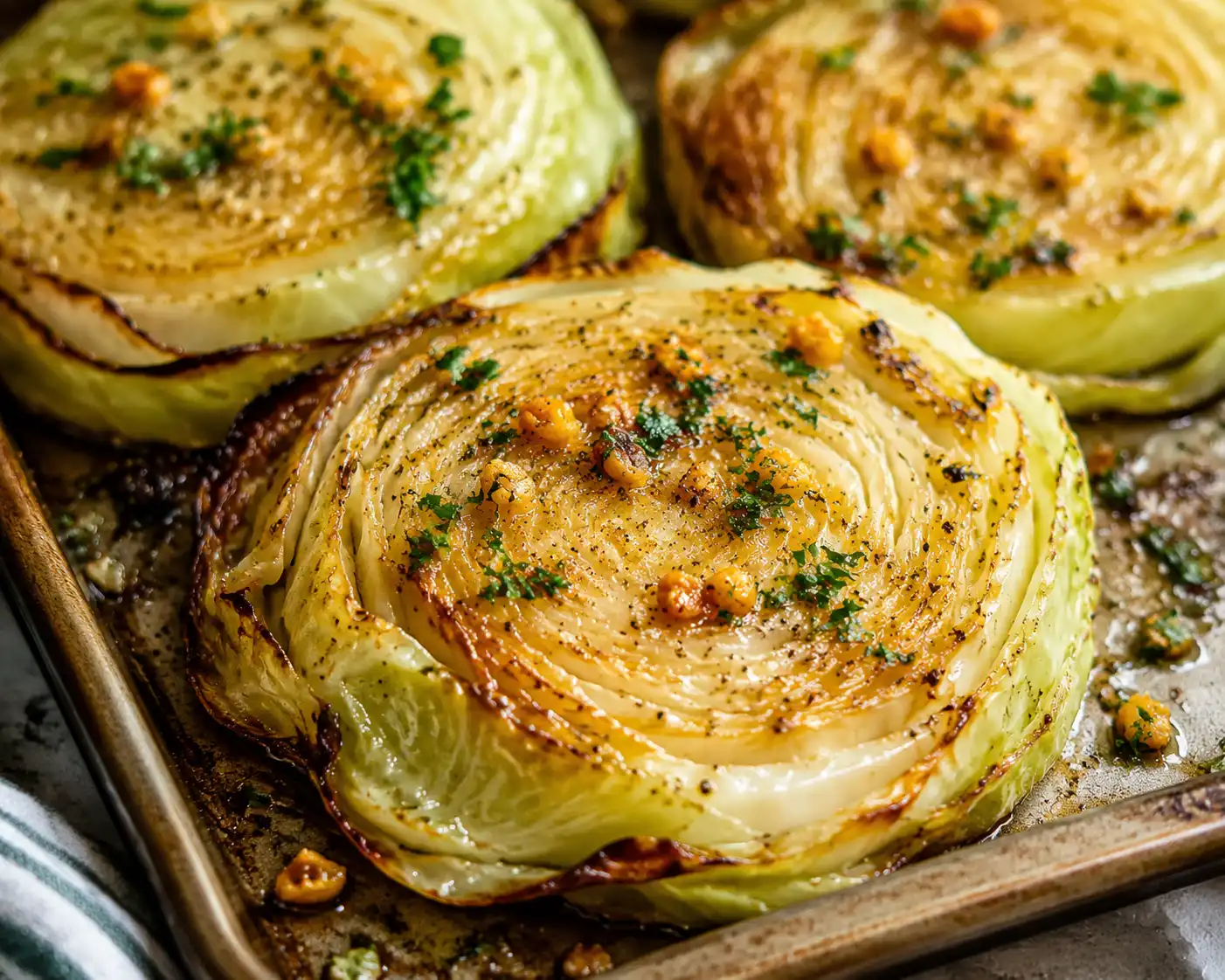
Imagine tender, caramelized cabbage steaks—crisp-edged and buttery-soft at the center—bathed in a rich, aromatic garlic butter sauce infused with fresh herbs and a whisper of lemon zest. Savory Garlic Butter Roasted Cabbage Steaks are more than just a side dish; they’re a revelation—a humble cruciferous vegetable transformed into an elegant, deeply flavorful, and unexpectedly comforting centerpiece for any meal. Whether you’re seeking a vegetarian showstopper, a low-carb alternative to starchy sides, or simply a way to breathe new life into an often-overlooked pantry staple, this recipe delivers warmth, depth, and soul-satisfying richness in every bite. With minimal prep, pantry-friendly ingredients, and hands-off roasting, it’s the ideal cozy side for weeknight dinners, holiday spreads, or Sunday suppers alike.
The History
While roasted whole cabbage “steaks” may feel like a modern culinary trend popularized by food blogs and wellness influencers around the early 2010s, the roots of cooking cabbage with fat and heat run deep across global traditions. In Eastern Europe, cabbage has long been slow-braised in lard or rendered pork fat (think Polish kapusta or Ukrainian borsch accompaniments). In Germany and Scandinavia, roasted or pan-seared cabbage wedges were common peasant fare—valued for their hardiness through winter and ability to absorb savory, umami-rich seasonings. The “steak” iteration—slicing cabbage horizontally into thick, grillable slabs—gained traction as chefs and home cooks rediscovered the vegetable’s textural potential: when roasted properly, the outer leaves crisp like kale chips while the inner core softens into something reminiscent of roasted artichoke hearts or even mild, sweet leeks. The addition of garlic butter is a natural evolution—echoing classic French chou farci techniques and American bistro-style sautéed cabbage, but elevated through high-heat roasting that unlocks natural sugars and creates complex Maillard-driven notes. Today, Garlic Butter Roasted Cabbage Steaks symbolize the broader farm-to-table and nose-to-tail (or stem-to-core) movement—celebrating simplicity, seasonality, and the profound flavor hidden in overlooked ingredients.
Ingredients Breakdown
Every element in this dish plays a purpose—no filler, no afterthoughts. Let’s explore why each ingredient matters:
- Cabbage: A dense, firm head of green cabbage (about 2–2.5 lbs) is essential. Look for one with tight, glossy, unblemished leaves and a heavy, compact feel—this ensures structural integrity when sliced and roasted. Savoy cabbage can be used for a more delicate, crinkled texture and subtle sweetness, while purple cabbage adds visual drama and anthocyanin antioxidants—but note its slightly sharper flavor and tendency to bleed color into the butter.
- Unsalted Butter: High-quality, grass-fed unsalted butter contributes not only luxurious mouthfeel but also nuanced dairy notes and a golden, nutty aroma when browned. Unsalted allows precise control over sodium levels—especially important if pairing with already-salted mains like roasted meats or cured sausages.
- Fresh Garlic: Minced (not powdered or jarred) for vibrant, pungent heat that mellows and sweetens during roasting. Raw garlic would burn; roasted garlic infuses the butter with deep, caramelized umami. For extra dimension, reserve a few whole cloves to tuck between the cabbage layers before roasting—they’ll melt into sweet, jammy nuggets.
- Fresh Herbs: Flat-leaf parsley adds bright, grassy freshness that cuts through richness; thyme contributes earthy, floral complexity; rosemary (used sparingly) lends pine-like intensity. All are added post-roast to preserve volatile aromatic oils lost under high heat.
- Lemon Zest & Juice: Zest provides concentrated citrus oil—brightening without acidity—while a final squeeze of juice adds a gentle tang that balances butterfat and enhances perceived sweetness of the roasted cabbage.
- High-Heat Oil: Avocado, grapeseed, or light olive oil helps conduct heat evenly, promotes superior browning, and prevents sticking—critical for achieving that coveted crisp exterior without drying out the interior.
- Flaky Sea Salt & Freshly Cracked Black Pepper: Maldon or fleur de sel finishes the dish with delicate crunch and clean salinity; coarsely ground black pepper adds warmth and subtle spice that complements garlic’s allium character.
- Optional Enhancements: A splash of dry white wine or apple cider vinegar deglazes the pan and builds fond-based depth; toasted pine nuts or walnuts add textural contrast and healthy fats; crumbled goat cheese or feta offers creamy tang; smoked paprika or Aleppo pepper introduces gentle smokiness or fruit-forward heat.
Step-by-Step Recipe
- Select & Prep the Cabbage: Choose a firm, heavy green cabbage. Remove any wilted or discolored outer leaves. Rinse under cool water and pat *thoroughly* dry—moisture is the enemy of browning. Trim only the very bottom stem end to create a flat, stable base—do *not* cut off the core, as it holds the “steak” together during roasting.
- Slice into Steaks: Place cabbage on its trimmed base. Using a sharp, heavy chef’s knife, carefully slice vertically (from top to bottom) into 1-inch-thick slabs. Aim for 2–4 steaks depending on size—center steaks will be most uniform; outer ones may have looser leaves but are equally delicious. Gently press outer leaves back into place if they loosen.
- Season Generously: Brush both sides of each steak liberally with high-heat oil. Sprinkle evenly with salt and pepper—don’t be shy; cabbage needs seasoning to shine. Optional: tuck 2–3 whole peeled garlic cloves and a small sprig of thyme between the layers of each steak.
- Preheat & Pan-Prep: Position oven rack in the upper third. Preheat oven to 425°F (220°C). While heating, place a large, oven-safe skillet (cast iron preferred) or rimmed baking sheet in the oven for 10 minutes—it must be *scorching hot* to instantly sear the cabbage upon contact, locking in moisture and jumpstarting caramelization.
- Initial Sear (Key Step): Carefully remove the hot pan. Add 1 tbsp oil if needed. Place cabbage steaks in the pan, leaving space between them. Press down gently with a spatula for even contact. Roast undisturbed for 15 minutes—this sets the crust and begins tenderizing the core.
- Flip & Baste: Rotate steaks 180° for even browning, then flip carefully using two spatulas. Reduce heat to 400°F (200°C). In a small saucepan, melt 4 tbsp butter over medium-low heat. Add minced garlic and cook 60–90 seconds until fragrant but *not browned*. Stir in lemon zest and a pinch of red pepper flakes (if using). Immediately spoon half the garlic butter over the steaks.
- Final Roast & Finish: Return to oven for 12–18 minutes, basting every 5 minutes with remaining garlic butter, until edges are deeply golden and crisp, centers yield gently to a fork (like al dente pasta), and internal temp reaches 190–200°F (88–93°C). Total roast time: 27–33 minutes.
- Rest & Garnish: Transfer steaks to a wire rack or plate. Rest 5 minutes—this allows residual heat to finish cooking the core and redistributes juices. Drizzle with lemon juice, scatter with fresh herbs, flaky salt, and optional toppings. Serve immediately.
Tips
- Dryness is Non-Negotiable: Even a film of surface moisture inhibits browning. After washing, lay cabbage on clean towels and air-dry for 10 minutes—or use a salad spinner for speed.
- Sharp Knife = Clean Slices: A dull blade crushes cabbage fibers, causing sogginess and uneven cooking. Hone your knife before slicing.
- Don’t Crowd the Pan: Overlapping steaks steam instead of roast. Use two pans if needed—or roast in batches.
- Embrace the Core: Leaving the core intact isn’t optional—it’s structural. If a steak starts to loosen mid-roast, secure it with a toothpick (remove before serving).
- Baste Like a Pro: Use a silicone basting brush for even coverage. Spoon excess butter from the pan over steaks too—it’s full of concentrated flavor and fond.
- Watch the Garlic Like a Hawk: Burnt garlic turns bitter. Mince finely and cook in cool butter—not hot oil—and remove from heat the second fragrance blooms.
- Adjust for Your Oven: Convection ovens reduce time by ~15%. If your oven runs hot, lower temp by 10–15°F and extend time slightly.
- Leftovers? Repurpose Brilliantly: Chopped roasted cabbage makes exceptional frittata filling, grain bowl base, or savory tart topping. Reheat gently in a skillet with a splash of broth to revive tenderness.
Variations and Customizations
This recipe is a canvas—adaptable to dietary needs, seasonal produce, and global flavor profiles:
- Vegan Version: Substitute high-quality vegan butter (e.g., Miyoko’s or Forager) and add 1 tsp nutritional yeast to the garlic butter for umami depth. Use tamari instead of soy sauce if adding Asian flair.
- Mediterranean Twist: Replace thyme with oregano; add chopped sun-dried tomatoes, kalamata olives, and crumbled feta post-roast. Finish with a drizzle of good-quality olive oil and lemon.
- Smoky BBQ Style: Rub steaks with a blend of smoked paprika, cumin, garlic powder, and touch of maple syrup before roasting. Baste with garlic butter infused with chipotle in adobo (minced).
- Asian-Inspired: Swap butter for toasted sesame oil and neutral oil blend. Marinate steaks 15 min in tamari, rice vinegar, grated ginger, and scallion whites. Garnish with sesame seeds, nori strips, and yuzu kosho.
- Herb-Forward Spring: Use baby gem or napa cabbage for tenderness. Baste with dill-infused butter and finish with edible flowers, chive blossoms, and lemon verbena.
- Protein-Powered: Nestle marinated tofu cubes, chickpeas, or shredded rotisserie chicken between cabbage layers before roasting. Or serve alongside grilled shrimp or seared scallops.
- Sweet-Savory Fusion: Add 1 tbsp apple butter or reduced apple cider to the garlic butter. Top with candied pecans and crispy prosciutto ribbons.
- Low-FODMAP Option: Omit garlic and onion; use garlic-infused oil (FODMAP-certified) and swap butter for ghee. Season with chives (green parts only), ginger, and turmeric.
Health Considerations and Nutritional Value
Far from being a “diet food,” Savory Garlic Butter Roasted Cabbage Steaks deliver impressive phytonutrient density with thoughtful preparation:
- Vitamin C Powerhouse: One cup of cooked cabbage provides over 50% of the Daily Value (DV) of vitamin C—an antioxidant critical for immune function, collagen synthesis, and iron absorption. Roasting preserves more vitamin C than boiling.
- Cruciferous Superstar: Rich in glucosinolates (especially sinigrin), which convert to sulforaphane upon chopping/cooking—a compound extensively studied for anti-inflammatory, detox-supportive, and potential cancer-protective effects.
- Fiber-Rich & Gut-Healthy: 1 medium cabbage steak (~150g) contains ~4g dietary fiber—including soluble fiber (pectin) that feeds beneficial gut bacteria and insoluble fiber that supports regularity.
- Natural Nitrate Source: Contains dietary nitrates linked to improved blood flow and exercise performance—naturally occurring, unlike processed nitrate additives.
- Butter’s Nuanced Benefits: Grass-fed butter supplies butyrate (a short-chain fatty acid shown to nourish colon cells), vitamin K2 (vital for calcium metabolism), and conjugated linoleic acid (CLA), associated with metabolic health in clinical studies.
- Low-Calorie, High-Volume: At ~80–100 calories per serving (depending on butter quantity), it’s incredibly satiating due to fiber and water content—ideal for mindful eating.
- Considerations: Those managing sodium intake should use minimal added salt and rely on herbs/lemon for flavor. For saturated fat concerns, reduce butter to 2 tbsp and supplement with heart-healthy avocado oil. Individuals with IBS may tolerate roasted cabbage better than raw due to softened fiber—but portion size (½ steak) and gradual introduction are advised.
Ingredients
- 1 large firm green cabbage (approx. 2–2.5 lbs / 900g–1.1 kg)
- 3 tbsp high-heat neutral oil (avocado, grapeseed, or light olive oil), divided
- 1 tsp flaky sea salt (e.g., Maldon), plus more to taste
- 1 tsp freshly cracked black pepper
- 4 tbsp unsalted butter (grass-fed preferred)
- 4 cloves garlic, finely minced (plus 4 whole cloves, peeled, for optional infusion)
- 1 tsp lemon zest (from ½ organic lemon)
- 1 tbsp fresh lemon juice (from same lemon)
- ¼ cup fresh flat-leaf parsley, finely chopped
- 1 tbsp fresh thyme leaves (or 1 tsp dried)
- Optional: 2 tbsp toasted pine nuts or walnuts, 2 tbsp crumbled goat cheese, pinch of red pepper flakes
Directions
- Preheat oven to 425°F (220°C). Place a 12-inch cast-iron skillet or heavy-duty rimmed baking sheet inside to heat for 10 minutes.
- Remove outer cabbage leaves. Rinse and *thoroughly* pat dry with clean towels. Trim only the very bottom stem to create a flat base—leave core intact.
- Place cabbage upright on cutting board. Slice vertically into four 1-inch-thick steaks. Gently press loose outer leaves back into place.
- In a small bowl, whisk 2 tbsp oil, salt, and pepper. Brush both sides of each steak generously. Tuck 1 whole garlic clove and a small thyme sprig between layers of each steak (optional but recommended).
- Carefully remove hot pan from oven. Add remaining 1 tbsp oil. Place steaks in pan, spaced apart. Press gently. Roast 15 minutes undisturbed.
- Rotate steaks 180°, then flip carefully. Reduce oven temperature to 400°F (200°C).
- In a small saucepan, melt butter over medium-low heat. Add minced garlic and cook 60–90 seconds until fragrant. Remove from heat; stir in lemon zest and red pepper flakes (if using).
- Spoon half the garlic butter over steaks. Roast 12 minutes. Baste with remaining butter. Continue roasting 3–6 more minutes until edges are deeply golden, centers are tender-crisp, and internal temp reads 190–200°F.
- Transfer steaks to a wire rack. Rest 5 minutes. Drizzle with lemon juice, scatter with parsley, thyme, flaky salt, and optional toppings. Serve warm.
FAQ
- Can I make these ahead of time?
- Yes—roast fully, cool completely, and refrigerate up to 3 days. Reheat in a 375°F oven (10–12 min) or skillet (3–4 min per side) with a splash of broth or water to restore moisture. Avoid microwaving—it makes cabbage soggy.
- Why did my cabbage steaks fall apart?
- Most likely causes: cutting *through* the core (always slice vertically, preserving the core), using a mushy or overripe cabbage, insufficient drying before roasting, or flipping too aggressively. Next time, secure with toothpicks or try a firmer Savoy variety.
- Can I grill these instead of roasting?
- Absolutely! Preheat grill to medium-high (400–425°F). Oil grates well. Grill steaks 6–8 minutes per side, covered, basting with garlic butter in the last 2 minutes. Watch closely—the direct heat caramelizes faster.
- Is there a substitute for butter for dairy-free diets?
- Yes—use cultured vegan butter (not margarine) or a blend of refined coconut oil + olive oil (3:1 ratio) for richness and stability. Add ½ tsp nutritional yeast and ⅛ tsp turmeric for color and depth.
- How do I know when they’re done?
- Look for deep golden-brown, almost lacquered edges; a slight give (not mush) when pressed with a fork at the thickest part; and an internal temperature of 190–200°F. Underdone cabbage tastes raw and fibrous; overdone becomes mealy.
- Can I use red cabbage?
- You can—but expect longer roasting time (up to 5 extra minutes) due to denser structure, and vivid purple bleeding into the butter. It’s stunning visually and nutritionally rich, but slightly more peppery. Pair with bold flavors like orange zest or balsamic.
- What main dishes pair best with this?
- It’s incredibly versatile: roasted chicken or turkey, pan-seared pork chops, grilled salmon or cod, lentil-walnut loaf, mushroom risotto, or even as a hearty component in a Buddha bowl with quinoa and tahini dressing.
- Can I freeze roasted cabbage steaks?
- Not recommended—freezing breaks down cell walls, resulting in severe sogginess and loss of texture upon thawing. Best enjoyed fresh or refrigerated for short-term use.
Summary
Savory Garlic Butter Roasted Cabbage Steaks transform humble green cabbage into a restaurant-worthy, deeply comforting side dish—featuring crisp caramelized edges, tender-sweet interiors, and luxurious herb-garlic butter that clings to every crevice.
With its rich history, flexible customization, notable nutritional benefits, and foolproof technique, this dish proves that extraordinary flavor and cozy satisfaction can emerge from the simplest, most accessible ingredients—making it a timeless, adaptable, and deeply satisfying addition to any kitchen repertoire.