Introduction
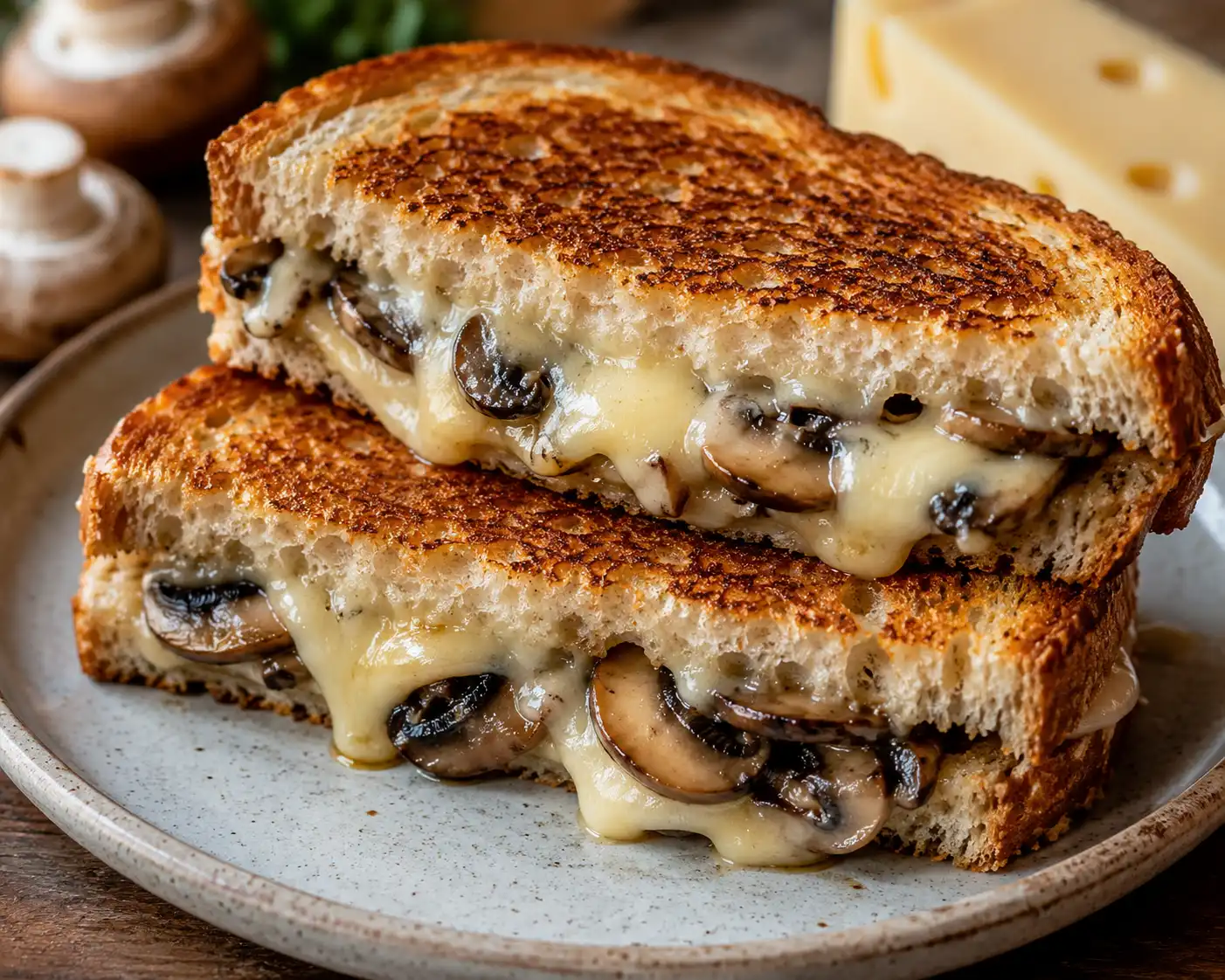
The Easy Swiss Mushroom Melt is a beloved, soul-satisfying sandwich that marries the earthy depth of sautéed mushrooms with the rich, nutty creaminess of Swiss cheese—melting luxuriously between two slices of toasted bread. Simple in concept yet deeply flavorful in execution, this sandwich transcends its humble ingredients to deliver restaurant-quality comfort in under 20 minutes. Whether served as a cozy weeknight dinner, a hearty lunch, or even an elevated appetizer at casual gatherings, the Swiss mushroom melt embodies the perfect balance of texture, umami, and warmth. Its accessibility—requiring no special equipment beyond a skillet and toaster—and forgiving technique make it an ideal entry point for novice cooks, while its layered complexity continues to delight seasoned food enthusiasts.
The History
Though not tied to a single documented origin story, the Swiss mushroom melt evolved organically from mid-20th-century American diner culture—a golden era when grilled cheese sandwiches underwent creative regional reinventions. Swiss cheese, imported widely after WWII and prized for its distinctive holes (or “eyes”) and caramelized, slightly sweet finish, became a popular alternative to American or cheddar in grilled sandwiches. Mushrooms—particularly cultivated white button and cremini varieties—gained mainstream popularity in U.S. kitchens during the same period thanks to improved farming, refrigeration, and grocery distribution. The pairing of mushrooms and Swiss cheese was likely inspired by classic European preparations like Swiss Gratin, French duxelles, and Alpine fondue traditions, where earthy fungi and aged, nutty cheeses coexist harmoniously. By the 1970s and ’80s, variations appeared on diner menus across the Midwest and Pacific Northwest, often dubbed “Mushroom Swiss Burgers” or “Alpine Melts.” The “Easy” iteration emerged more recently with the rise of food blogs and minimalist cooking philosophy—streamlining steps, reducing prep time, and emphasizing accessible, whole-food ingredients without sacrificing depth of flavor.
Ingredients Breakdown
Every exceptional Swiss mushroom melt begins with thoughtfully selected components—each playing a distinct sensory role:
- Mushrooms: Cremini (baby bella) are ideal—more robust than white buttons but milder than portobellos, with superior browning ability and meaty texture. Their natural glutamates amplify umami. Avoid pre-sliced “value packs” if possible; whole mushrooms retain more moisture and flavor during cooking.
- Swiss Cheese: Authentic Emmental or Gruyère delivers nuanced complexity—nutty, slightly fruity, with excellent meltability. Pre-shredded cheese contains anti-caking starches (like cellulose or potato starch) that inhibit smooth melting and can create graininess; always grate fresh.
- Bread: A sturdy, medium-density loaf is essential—sourdough, rye, brioche, or rustic multigrain all work beautifully. It must withstand moisture from the mushrooms without becoming soggy, yet toast to a crisp, buttery golden-brown exterior. Slicing ¾-inch thick ensures structural integrity and optimal cheese-to-bread ratio.
- Aromatics & Fat: Yellow onion adds sweetness when caramelized slowly; garlic contributes pungent depth—but both must be finely minced and cooked gently to avoid bitterness. Unsalted butter is non-negotiable for toasting—the milk solids caramelize for rich flavor and crispness, while its fat content carries fat-soluble flavor compounds.
- Liquid & Seasoning: Dry white wine (e.g., Sauvignon Blanc or Pinot Grigio) deglazes the pan, lifting browned bits (fond) and adding bright acidity to cut richness. A splash of low-sodium soy sauce or tamari introduces fermented savoriness (without overpowering); Dijon mustard lends subtle tang and emulsifying power. Fresh thyme complements mushrooms’ earthiness, while black pepper adds aromatic heat—salt is added judiciously at the end to preserve the cheese’s natural salinity.
Step-by-Step Recipe
- Prep the Ingredients: Wipe mushrooms clean with a damp paper towel (never soak—they absorb water). Slice uniformly ¼-inch thick. Finely dice ½ small yellow onion and 1 small garlic clove. Grate 4 oz (about 1 cup) Swiss cheese on the large holes of a box grater. Toast 4 slices of bread lightly—just enough to dry the surface slightly (this prevents sogginess later). Set aside.
- Sauté the Aromatics: In a 10–12 inch nonstick or well-seasoned cast-iron skillet, melt 1 tbsp unsalted butter over medium-low heat. Add diced onion and cook, stirring occasionally, until soft and translucent (~4 minutes). Add minced garlic and cook 30 seconds—just until fragrant—taking care not to brown.
- Cook the Mushrooms: Increase heat to medium-high. Add mushrooms in a single layer (work in batches if needed to avoid steaming). Let sit undisturbed for 2 minutes to develop fond. Stir, then continue cooking, stirring every 60–90 seconds, until mushrooms shrink significantly, release liquid, and that liquid fully evaporates (~6–8 minutes total). You’ll know they’re ready when they’re deeply golden-brown, slightly shrunken, and smell intensely savory.
- Build Flavor: Reduce heat to medium. Pour in 2 tbsp dry white wine, scraping vigorously with a wooden spoon to lift all browned bits. Simmer 1 minute until nearly evaporated. Stir in 1 tsp Dijon mustard, 1 tsp low-sodium soy sauce, ½ tsp fresh thyme leaves, and freshly ground black pepper to taste. Remove from heat and let cool 2 minutes—this prevents cheese from seizing when mixed in.
- Assemble the Sandwich: Butter the *outer* sides of each toast slice generously (about ½ tbsp per side). Place two slices, butter-side-down, in the same skillet over medium-low heat. Sprinkle half the grated Swiss evenly over each. Spoon mushroom mixture evenly over cheese—do not overload (approx. ⅓ cup per sandwich). Top with remaining cheese, then remaining bread slices, butter-side-up.
- Grill to Perfection: Cover skillet loosely with aluminum foil or a lid to trap steam and accelerate melting. Cook 3–4 minutes until bottoms are deep golden and cheese begins to soften. Carefully flip using two spatulas (support bottom slice firmly). Press gently. Cover again and cook another 3–4 minutes until second side is crisp and golden, and cheese is fully molten with visible bubbles at the edges.
- Rest and Serve: Transfer sandwiches to a wire rack for 90 seconds—this allows residual heat to finish melting and lets excess butter drain, yielding crisp exteriors and cohesive interiors. Slice diagonally and serve immediately.
Tips
- Dry Your Mushrooms Thoroughly: Excess surface moisture causes steaming instead of searing—pat them with paper towels before slicing.
- Don’t Crowd the Pan: Overloading lowers pan temperature and creates steam, resulting in gray, rubbery mushrooms—not golden, flavorful ones.
- Control the Heat: Onions need low-and-slow; mushrooms need high-and-fast. Adjust accordingly—don’t rush either stage.
- Use a Heavy-Bottomed Skillet: Ensures even heat distribution, preventing hot spots that burn garlic or scorch butter.
- Press Gently While Grilling: A light press with a spatula helps maximize contact and melt—but don’t smash, or you’ll squeeze out precious juices and flatten texture.
- Let It Rest: Skipping the 90-second rest invites a messy, drippy first bite. Patience = structural integrity.
- Keep Cheese Cold Until Use: Grate just before assembling—warm cheese clumps and melts unevenly.
- Butter at Room Temperature: Softened butter spreads more evenly and creates a more consistent crust than cold butter.
- Season Late, Not Early: Salt mushrooms too soon draws out water and hinders browning. Wait until the final flavor-building step.
- Invest in a Good Grater: Microplane or box grater with sharp teeth yields fine, uniform shreds that melt faster and more evenly than coarse shreds.
Variations and Customizations
The Easy Swiss Mushroom Melt is gloriously adaptable—here are inspired twists, each preserving the core integrity while introducing new dimensions:
- Herb-Infused: Stir in 1 tbsp chopped fresh tarragon or parsley at the end for brightness; add lemon zest for a citrus lift.
- Umami Bomb: Add 1 tsp miso paste (white or red) with the soy sauce—or swap soy for coconut aminos for a gluten-free, subtly sweet twist.
- Smoky Depth: Finish mushrooms with ¼ tsp smoked paprika or a few drops of liquid smoke (use sparingly!).
- Spicy Kick: Add ¼ tsp crushed red pepper flakes with the garlic—or top finished sandwich with pickled jalapeños.
- Gourmet Mushroom Blend: Replace half the cremini with oyster, shiitake, or maitake mushrooms for layered woodsy notes.
- Vegetable-Forward: Fold in ¼ cup finely diced roasted red peppers or caramelized leeks for sweetness and color.
- Protein-Powered: Add 2 tbsp crumbled cooked bacon or ¼ cup shredded rotisserie chicken to the mushroom mix before assembling.
- Gluten-Free Friendly: Use certified GF bread and tamari instead of soy sauce; ensure mustard is GF-labeled.
- Vegan Version: Substitute cashew-based Swiss-style vegan cheese, olive oil for butter, and tamari + nutritional yeast for umami. Add 1 tsp apple cider vinegar for tang.
- Breakfast Melt: Add a fried or poached egg on top post-grilling—or fold in scrambled eggs with the mushrooms.
- Open-Faced “Croque Monsieur” Style: Use one thick slice of pain de campagne, top with mushroom mixture and double-layered Swiss, broil until bubbly and bronzed, then garnish with Dijon-dressed arugula.
- Mini Slider Edition: Use Hawaiian rolls or brioche slider buns, halve portions, and secure with decorative picks for parties.
Health Considerations and Nutritional Value
A single serving (one 4-oz sandwich made with 2 slices sourdough, 1 cup cremini mushrooms, 4 oz Swiss, 1 tbsp butter) provides approximately:
- Calories: ~520 kcal
- Protein: ~28 g (Swiss cheese contributes ~24 g; mushrooms add ~3 g complete plant protein)
- Fat: ~32 g (mostly unsaturated from mushrooms and butter; Swiss contains ~18 g sat fat—moderation advised)
- Carbs: ~30 g (primarily complex carbs from whole-grain or sourdough bread; low glycemic impact)
- Fiber: ~3 g (from mushrooms and whole-grain bread—supports gut health)
- Vitamins & Minerals: Rich in B vitamins (especially riboflavin and niacin), selenium (a potent antioxidant abundant in mushrooms), calcium and phosphorus (from Swiss), and vitamin D (naturally present in UV-exposed mushrooms).
Health Notes:
- Lower-Sodium Option: Use low-sodium Swiss (if available), omit added salt, and rely on herbs, mustard, and wine for flavor. Total sodium can drop from ~680 mg to ~420 mg per sandwich.
- Heart-Healthy Swaps: Replace half the butter with heart-healthy avocado oil for toasting; choose part-skim Swiss to reduce saturated fat by ~25% without compromising melt.
- Digestive Benefits: Sourdough’s natural fermentation breaks down phytic acid and improves mineral bioavailability—ideal for sensitive digesters.
- Weight-Conscious Tweaks: Use 1 slice of thin whole-grain bread per sandwich (open-faced), increase mushroom volume to 1.5 cups for bulk and satiety, and reduce cheese to 2 oz.
- Allergen Awareness: Naturally gluten-free if using GF bread; dairy-free alternatives exist (see Vegan Variation). Always verify labels for soy, mustard, and dairy derivatives.
- Anti-Inflammatory Boost: Mushrooms contain ergothioneine and glutathione—powerful antioxidants linked to reduced oxidative stress. Pairing with polyphenol-rich herbs (thyme, rosemary) enhances this effect.
Ingredients
- 1 lb (450 g) cremini mushrooms, wiped clean and sliced ¼-inch thick
- ½ small yellow onion, finely diced (~¼ cup)
- 1 garlic clove, minced
- 4 oz (115 g) authentic Swiss cheese (Emmental or Gruyère), freshly grated (~1 cup)
- 4 slices sturdy artisan bread (sourdough, rye, or brioche), ¾-inch thick
- 2 tbsp unsalted butter, softened (for outer toast)
- 1 tbsp unsalted butter, for sautéing
- 2 tbsp dry white wine (Sauvignon Blanc or Pinot Grigio)
- 1 tsp Dijon mustard
- 1 tsp low-sodium soy sauce or tamari
- ½ tsp fresh thyme leaves (or ¼ tsp dried)
- Freshly ground black pepper, to taste
- Kosher salt, to taste (use sparingly—cheese is naturally salty)
Directions
- Wipe mushrooms clean with a damp paper towel; trim stems if woody. Slice uniformly ¼-inch thick. Place in a bowl and set aside.
- Finely dice onion and mince garlic. Grate Swiss cheese using the large holes of a box grater. Set cheese aside in refrigerator until needed.
- Lightly toast bread in a toaster or oven (just until surface dries—no color needed). This prevents sogginess later.
- Heat 1 tbsp unsalted butter in a 10–12 inch heavy-bottomed skillet over medium-low heat. Add diced onion and cook, stirring occasionally, until soft and translucent (about 4 minutes).
- Add minced garlic and cook 30 seconds—until fragrant but not browned.
- Increase heat to medium-high. Add mushrooms in a single layer. Let sit undisturbed for 2 minutes to develop fond. Stir, then continue cooking, stirring every 60–90 seconds, until mushrooms shrink, release liquid, and that liquid fully evaporates (~6–8 minutes). They should be deeply golden-brown and intensely fragrant.
- Reduce heat to medium. Pour in white wine, scraping bottom of pan vigorously to lift all browned bits. Simmer 1 minute until nearly evaporated.
- Stir in Dijon mustard, soy sauce, thyme, black pepper, and a pinch of kosher salt. Remove from heat and let cool 2 minutes.
- Butter outer sides of each toast slice with softened butter (½ tbsp per side).
- Place two buttered slices in the skillet over medium-low heat, butter-side-down. Sprinkle ½ the grated Swiss evenly over each. Spoon mushroom mixture evenly over cheese (about ⅓ cup per sandwich). Top with remaining cheese, then remaining bread slices, butter-side-up.
- Cover skillet loosely with foil or a lid. Cook 3–4 minutes until bottoms are deep golden and cheese begins to soften.
- Carefully flip sandwiches using two sturdy spatulas. Press gently. Cover again and cook another 3–4 minutes until second side is crisp and golden, and cheese is fully molten with visible bubbling at edges.
- Transfer sandwiches to a wire cooling rack. Rest for 90 seconds to set structure and drain excess butter.
- Slice diagonally and serve immediately—preferably with a simple green salad dressed in lemon vinaigrette or a cup of roasted tomato soup.
FAQ
- Can I make this ahead of time?
- Yes—with caveats: Sautéed mushrooms keep refrigerated for up to 4 days or frozen for 3 months. Assemble and grill sandwiches fresh—pre-grilled melts become soggy and lose crispness. You can prep components (slice mushrooms, grate cheese, dice onion) up to 1 day ahead and store separately in airtight containers.
- Why does my cheese never melt smoothly?
- Three common culprits: 1) Using pre-shredded cheese (contains anti-caking starches), 2) Adding cheese to piping-hot mushrooms (causes seizing), or 3) Overheating the skillet during grilling (burns proteins, creating stringy or greasy separation). Always grate fresh, let mushrooms cool slightly before mixing in cheese, and use medium-low heat for grilling.
- What’s the best substitute for Swiss cheese?
- Gruyère is the closest match—nutty, complex, and superbly meltable. Fontina offers creamy mildness; Jarlsberg adds sweet butter notes; Raclette brings bold funk. Avoid provolone (too elastic) or feta (doesn’t melt). For dairy-free, try Violife Smoked Swiss or Miyoko’s Cultured Vegan Mozzarella.
- My mushrooms turned out watery—what went wrong?
- Overcrowding the pan is the #1 cause—it drops temperature and steams instead of sears. Also, skipping the “dry wipe” step or slicing mushrooms too thin increases surface moisture. Always cook in batches if needed, and resist stirring too early—let them sit to evaporate water and brown.
- Can I bake these instead of stovetop grilling?
- Absolutely! Assemble as directed (butter outsides), place on parchment-lined baking sheet, and bake at 375°F (190°C) for 12–15 minutes, flipping halfway, until golden and cheese bubbles. Broil 1–2 minutes at end for extra crispness—but watch closely!
- Is there a way to make this lower in calories?
- Yes: Use 1 tsp butter total (brushed thinly instead of 2 tbsp), opt for part-skim Swiss, increase mushrooms to 1.5 cups for volume/fiber, and choose sprouted grain or whole-rye bread (higher fiber, lower net carbs). Total calories drop to ~380–420 per sandwich.
- Can I use canned mushrooms?
- Not recommended. Canned mushrooms are waterlogged, bland, and lack textural integrity. Their high sodium and preservatives also interfere with flavor balance. Fresh is essential for authenticity and quality.
- How do I prevent the bread from burning before the cheese melts?
- Medium-low heat is key. If bread browns too fast, reduce heat and cover skillet to trap steam—which melts cheese faster without crisping further. Also, ensure your butter is evenly distributed—not pooled in spots that burn.
- What wine should I use if I don’t cook with alcohol?
- Substitute 2 tbsp unsweetened apple juice + ½ tsp white wine vinegar, or 2 tbsp vegetable broth + ½ tsp lemon juice. Both mimic the acidity and depth without alcohol.
- Can I freeze assembled uncooked melts?
- Yes—but wrap tightly in parchment + foil and freeze up to 2 months. Thaw overnight in fridge, then grill as directed (add 1–2 minutes per side). Texture remains excellent—just avoid refreezing.
Summary
The Easy Swiss Mushroom Melt is a masterclass in minimalist gourmet cooking—where humble, whole-food ingredients transform through thoughtful technique into a deeply satisfying, umami-rich comfort classic. With its golden-crisp bread, velvety melted Swiss, and savory-sweet sautéed mushrooms, it delivers restaurant-worthy depth in under 20 minutes, making it endlessly repeatable, highly customizable, and nutritionally balanced.
Whether you’re seeking a weeknight lifesaver, a crowd-pleasing appetizer, or a canvas for culinary creativity, this melt proves that extraordinary flavor doesn’t require complexity—just respect for ingredients, patience with process, and joy in the simple alchemy of heat, fat, and time.