Introduction
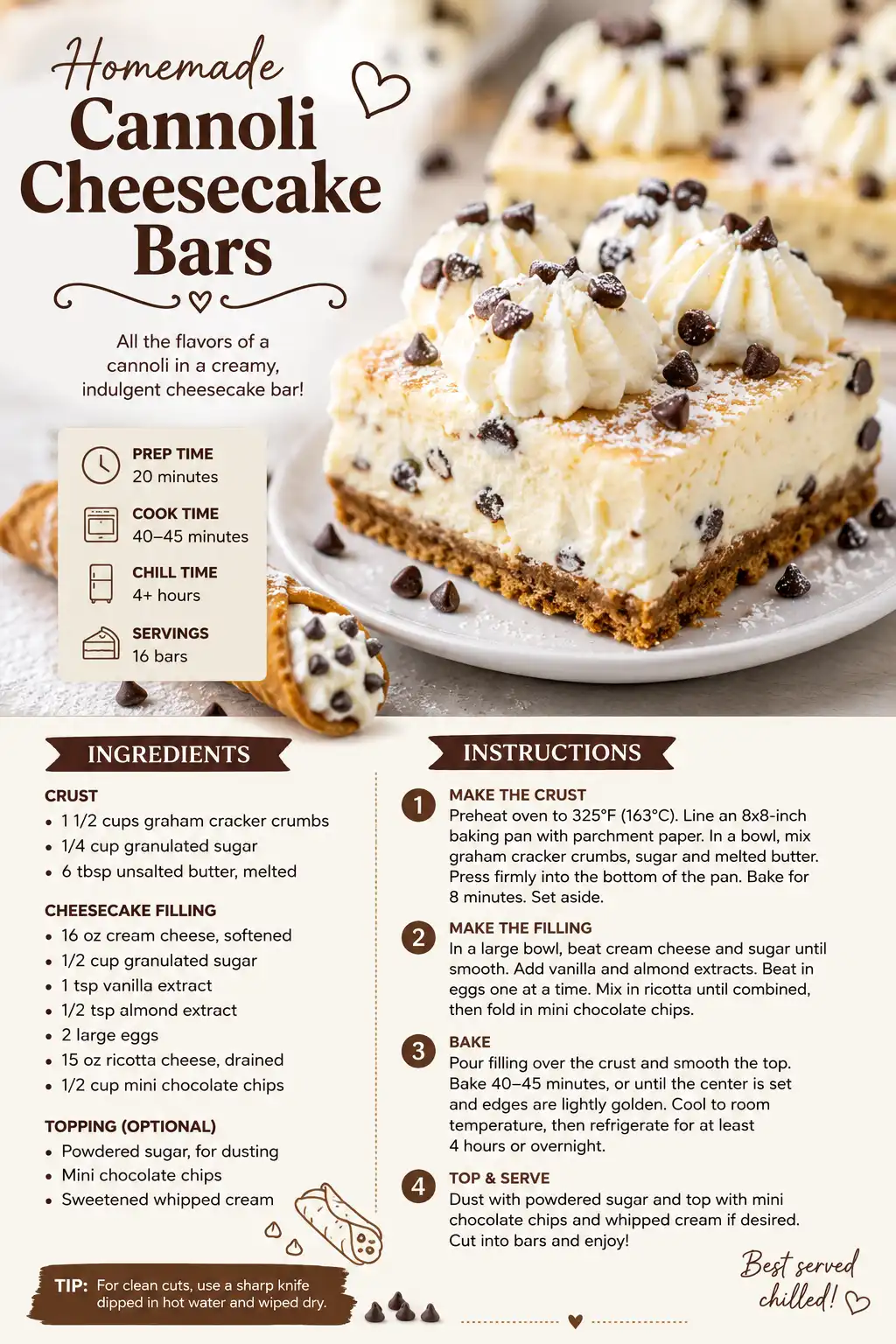
Welcome to a decadent fusion of two Italian-American classics: the crisp, creamy cannoli and the rich, velvety cheesecake. Cannoli Cheesecake Bars are not just a dessert—they’re an experience. Imagine biting into a buttery, cinnamon-sugar-dusted shortbread crust, giving way to a luxuriously smooth, ricotta-and-cream-cheese filling infused with vanilla, citrus zest, and miniature chocolate chips—then crowned with a delicate dusting of powdered sugar and crumbled cannoli shells. These bars combine the textural contrast of traditional cannoli (crisp shell + sweetened ricotta filling) with the structural ease and crowd-pleasing appeal of a no-bake or baked bar format. Whether you’re hosting a holiday gathering, preparing for a potluck, or simply treating yourself to something indulgent yet nostalgic, these bars deliver authenticity, elegance, and unmistakable Sicilian soul—all in a portable, sliceable, shareable format.
The History
To truly appreciate Cannoli Cheesecake Bars, one must first understand the storied roots of their parent desserts. The cannoli—a beloved Sicilian pastry—dates back to the Arab rule of Sicily (9th–11th centuries), when fried dough tubes were filled with sweetened sheep’s milk ricotta, often studded with candied fruit, pistachios, or chocolate. Its name derives from the Italian word canna, meaning “reed” or “tube,” referencing the original reed molds used to shape the shells. Over time, cannoli became emblematic of Italian-American celebrations—from weddings to Christmas—to symbolize fertility, prosperity, and joy.
Cheesecake, meanwhile, boasts even older origins: ancient Greeks baked simple cheese-and-honey cakes for athletes at the first Olympic Games (circa 776 BCE). Italian immigrants brought ricotta-based versions to America, but it was New York City’s cream cheese revolution—led by William Lawrence’s accidental 1872 invention of modern cream cheese in Chester, NY—that birthed the dense, tangy, oven-baked cheesecake we know today.
Cannoli Cheesecake Bars represent a 21st-century culinary evolution: a bridge between heritage and innovation. Food bloggers, home bakers, and Italian-American chefs began experimenting in the early 2010s, seeking ways to capture cannoli’s signature flavors without the labor-intensive frying and last-minute assembly. The bar format emerged as the perfect solution—offering make-ahead convenience, uniform portioning, and layered complexity that honors both traditions. Today, these bars appear on menus in Brooklyn bakeries, feature in Food & Wine’s “Modern Italian Desserts” roundups, and have earned cult status on Pinterest and TikTok for their photogenic swirls and irresistible aroma.
Ingredients Breakdown
Every extraordinary dessert begins with intentionality—and this recipe is no exception. Below is a meticulous, chef-level breakdown of each component, explaining *why* each ingredient matters, its ideal form, and common pitfalls to avoid:
For the Cannoli-Infused Shortbread Crust:
- Unsalted Butter (¾ cup, cold & cubed): Provides flakiness and richness. Cold butter prevents premature melting, ensuring a tender, crumbly-yet-cohesive base. European-style butter (82–84% fat) yields superior flavor and texture.
- Granulated Sugar (¼ cup): Adds subtle sweetness and aids in browning. Not overly sweet—lets the filling shine.
- All-Purpose Flour (1 ¼ cups): The structural backbone. Sifted for lump-free consistency. For gluten-free adaptation, use a 1:1 GF blend with xanthan gum.
- Ground Cinnamon (1 tsp) + Freshly Grated Orange Zest (from 1 medium orange): These are the *cannoli soul*. Cinnamon echoes the warm spice found in traditional cannoli filling; orange zest adds bright, floral acidity—authentic to Palermo-style recipes.
- Salt (¼ tsp): Balances sweetness and enhances all other flavors.
- Mini Semi-Sweet Chocolate Chips (2 tbsp, optional but highly recommended): Mimics the classic chocolate-dotted cannoli filling. Use high-cocoa (55–60%) mini chips for melt-in-the-mouth bursts—not large chips that sink or overwhelm.
For the Ricotta-Cream Cheese Filling:
- Whole-Milk Ricotta (1 ½ cups, well-drained overnight): Non-negotiable. Low-moisture ricotta is too dry; part-skim lacks fat for creaminess. Drain in cheesecloth-lined strainer for 8–12 hours to remove excess whey—this prevents a watery, separated filling and intensifies flavor.
- Full-Fat Cream Cheese (16 oz / 2 standard blocks, room temperature): Ensures seamless blending and luxurious mouthfeel. Cold cream cheese causes lumps; softened (65–70°F) is essential.
- Powdered Sugar (1 ¼ cups, sifted): Dissolves instantly, yielding smooth texture. Granulated sugar would grain the filling. Sifting eliminates clumps that cause streaks.
- Heavy Cream (⅓ cup): Adds fluidity, sheen, and richness. Do NOT substitute with milk or half-and-half—they lack fat content and will thin the filling excessively.
- Pure Vanilla Extract (2 tsp) + Almond Extract (¼ tsp): Vanilla provides depth; almond extract is a *traditional cannoli secret*—used sparingly to evoke marzipan-like nuance without overpowering.
- Fresh Lemon Zest (1 tbsp) + Fresh Orange Zest (1 tbsp): Brightens the entire dessert. Zest—not juice—is key: oils carry aromatic compounds that survive baking and chilling.
- Salt (¼ tsp): Critical for rounding out sweetness and highlighting dairy notes.
- Mini Semi-Sweet Chocolate Chips (⅔ cup) + Chopped Pistachios (¼ cup, unsalted, roasted): Represents the classic cannoli garnish trio: chocolate, pistachio, and shell. Pistachios add crunch, color, and authentic Sicilian flair.
For the Garnish & Finishing Touches:
- Crushed Traditional Cannoli Shells (1 cup, store-bought or homemade): Adds unmistakable crunch and nostalgia. Look for shells made with lard or butter (not palm oil) for best flavor. Pulse gently in food processor—avoid powder-fine crumbs.
- Powdered Sugar (for dusting): Use a fine-mesh sieve for an ethereal, even snowfall effect.
- Additional Orange Zest & Whole Roasted Pistachios (for visual garnish): Elevates presentation for special occasions.
Step-by-Step Recipe
This recipe yields 16 generous bars (9×13-inch pan) and takes approximately 3 hours total—including prep, chilling, and resting—but only 25 minutes of active work. Patience during chilling is non-negotiable for clean cuts and optimal texture.
Step 1: Prepare the Cannoli Shortbread Crust (15 min + 30 min chill)
- Preheat oven to 350°F (175°C). Line a 9×13-inch metal baking pan with parchment paper, leaving 2-inch overhang on two opposite sides for easy lifting.
- In a food processor, pulse cold cubed butter, granulated sugar, cinnamon, orange zest, and salt until mixture resembles coarse meal with pea-sized butter pieces (about 15–20 seconds).
- Add flour and pulse 5–6 times until just combined—do NOT over-process. Dough should hold together when pinched but not form a ball.
- Transfer to prepared pan. Press evenly into bottom using fingertips or flat-bottomed glass. Aim for ¼-inch thickness—uniformity ensures even baking.
- Prick crust all over with fork tines to prevent bubbling. Chill 30 minutes (or freeze 15 min) to solidify butter before baking.
- Bake 18–22 minutes, until edges are golden brown and center appears dry (not shiny). Cool completely in pan on wire rack—minimum 45 minutes. Do NOT skip cooling—warm crust absorbs filling moisture.
Step 2: Drain & Prep Ricotta (Overnight, non-negotiable)
- Line a fine-mesh strainer with 3 layers of cheesecloth or a coffee filter. Place over bowl.
- Add whole-milk ricotta. Gently stir in 1 tsp lemon juice (helps coagulate and further drain whey).
- Cover and refrigerate 8–12 hours (overnight ideal). Discard liquid. You should have ~1 ¼ cups ultra-thick, creamy ricotta.
Step 3: Make the Filling (20 min)
- Using stand mixer with paddle attachment (or hand mixer + large bowl), beat room-temperature cream cheese on medium speed 2 minutes until silky-smooth and free of lumps.
- Add drained ricotta and beat 2 more minutes—scrape bowl thoroughly halfway through.
- With mixer on low, gradually add sifted powdered sugar in 3 additions, beating 30 seconds after each until fully incorporated.
- Add heavy cream, vanilla, almond extract, lemon zest, orange zest, and salt. Mix on low 1 minute—do NOT overmix or incorporate air.
- Fold in mini chocolate chips and chopped pistachios with silicone spatula—just until evenly distributed. Over-folding bruises pistachios.
Step 4: Assemble & Chill (Minimum 8 hours, ideally 24)
- Spread filling evenly over cooled crust using offset spatula. Smooth surface meticulously—no peaks or valleys.
- Cover pan tightly with plastic wrap, pressing directly onto surface to prevent condensation and skin formation.
- Refrigerate minimum 8 hours—or preferably 24 hours—for full flavor melding, firm set, and clean slicing. Overnight chilling transforms texture from “good” to “restaurant-quality.”
Step 5: Garnish & Serve (10 min)
- Remove bars from fridge 15 minutes before cutting—slightly softened bars cut cleaner.
- Lift bars from pan using parchment overhang. Place on large cutting board.
- Using sharp, non-serrated knife dipped in hot water and wiped dry between cuts, slice into 4×4 grid (16 bars).
- Arrange bars on serving platter. Dust generously with powdered sugar using fine-mesh sieve.
- Top each bar with 1 tsp crushed cannoli shells, a sprinkle of orange zest, and 2–3 whole roasted pistachios.
- Serve chilled—but not ice-cold. Ideal temperature: 45–50°F for perfect creaminess.
Tips
- Drain ricotta religiously: Skipping this step guarantees a soggy, weeping, or cracked filling—even if everything else is perfect.
- Room-temp dairy is sacred: Cream cheese and ricotta must be truly room temp (65–70°F). Pull from fridge 2 hours ahead; do not microwave.
- No overmixing: Once sugar is added, beat only until combined. Over-beating incorporates air → bubbles → cracks or graininess upon chilling.
- Chill the knife: For pristine edges, chill your knife in freezer 10 minutes before cutting. Wipe clean and rewarm with hot water between every slice.
- Use metal pans: Glass or ceramic retains heat unevenly and can cause over-baked edges or under-set centers. Heavy-gauge aluminum is ideal.
- Make ahead magic: Fully assembled, uncut bars keep beautifully for 5 days refrigerated (covered) or 3 months frozen (wrap tightly in plastic + foil). Thaw overnight in fridge before serving.
- Fix separation: If filling appears slightly curdled after mixing, let sit at room temp 10 minutes, then gently whisk by hand 30 seconds—it will re-emulsify.
- Texture troubleshooting: Too soft? Chill longer. Too firm? Let sit at room temp 20 minutes before serving. Grainy? Likely undrained ricotta or cold cream cheese.
Variations and Customizations
This recipe is a canvas—respecting tradition while inviting creativity. Here are 12 thoughtfully tested variations, each preserving the core cannoli-cheesecake identity:
Dietary Adaptations
- Gluten-Free: Swap all-purpose flour for 1:1 gluten-free baking blend (like King Arthur or Bob’s Red Mill). Add ½ tsp xanthan gum if blend doesn’t include it. Verify all chocolate chips and cannoli shells are GF-certified.
- Lower-Sugar: Replace powdered sugar with ⅔ cup Swerve Confectioners (erythritol-based) + 2 tbsp monk fruit blend. Note: texture may be slightly less creamy; add 1 extra tbsp heavy cream.
- Dairy-Free: Use Kite Hill Ricotta (almond-based), Miyoko’s Cream Cheese, and coconut cream (chilled, solid part only). Flavor remains remarkably authentic.
Flavor Twists
- Lemon-Ricotta Only: Omit chocolate and pistachios. Double lemon zest (2 tbsp) and add 1 tbsp limoncello to filling. Garnish with candied lemon peel.
- Chocolate-Dipped: After cutting, dip bottom ½ inch of each bar in tempered dark chocolate. Chill 15 min. Drizzle with white chocolate and sea salt.
- Espresso Cannoli: Add 1 ½ tsp instant espresso powder to crust; fold 2 tbsp finely ground espresso beans into filling. Garnish with cocoa-dusted cannoli crumbs.
- Rosewater & Pistachio: Replace almond extract with ½ tsp culinary-grade rosewater. Use only pistachios (no chocolate) and garnish with edible rose petals.
Textural & Presentation Upgrades
- Layered Bars: After crust bakes and cools, spread ½ cup mascarpone whipped cream (mascarpone + powdered sugar + vanilla + whipped cream) before adding main filling—creates a cloud-like middle layer.
- Stuffed Mini Bars: Bake crust in mini muffin tin. Fill with 1 tsp filling, top with mini cannoli shell piece, then freeze 1 hour before unmolding.
- Deconstructed Platter: Serve components separately: chilled crust squares, ricotta filling in piping bag, crushed shells, pistachios, chocolate shavings—let guests assemble.
- Brûléed Top: Before chilling, sprinkle surface with turbinado sugar. Torch until caramelized. Chill 1 hour before cutting—adds crackling contrast.
- Boozy Infusion: Stir 1 tbsp Grand Marnier or Marsala wine into filling—enhances orange notes and adds sophistication.
Health Considerations and Nutritional Value
While Cannoli Cheesecake Bars are inherently indulgent, mindful preparation allows for balanced enjoyment—without sacrificing authenticity or satisfaction. Here’s a detailed nutritional and wellness perspective per standard 2×2-inch bar (1/16th of recipe):
Nutrition Facts (Approximate):
- Calories: 325 kcal
- Total Fat: 19g (11g saturated)
- Carbohydrates: 34g (26g sugars, 0.5g fiber)
- Protein: 7g
- Calcium: 12% DV (from ricotta & cream cheese)
- Vitamin A: 10% DV (from dairy fat)
- Iron: Trace (enhanced by pairing with vitamin C-rich orange zest)
Functional Benefits & Mindful Notes:
- Ricotta’s Role: Whole-milk ricotta provides high-quality whey protein, calcium, and conjugated linoleic acid (CLA)—a fatty acid linked to metabolic health in emerging research.
- Zest Power: Citrus zest delivers polyphenols (hesperidin, naringin) with antioxidant and anti-inflammatory properties—far more concentrated than juice.
- Pistachio Perks: Rich in heart-healthy monounsaturated fats, fiber, and plant sterols shown to modestly lower LDL cholesterol.
- Moderation Strategy: These bars are calorie-dense due to dairy fat and sugar—but portion control is built in (16 precise servings). Pair with herbal tea or sparkling water to slow consumption and enhance satiety.
- Allergen Awareness: Contains dairy, wheat, tree nuts (pistachios), and soy (in most chocolate chips). Always verify labels for hidden allergens like whey powder or soy lecithin.
- Not “Health Food”—But Health-Conscious: This recipe avoids hydrogenated oils, artificial flavors, or corn syrup. Every ingredient serves a sensory or functional purpose—making it a conscious indulgence, not empty calories.
Ingredients
Makes 16 bars
For the Cannoli Shortbread Crust:
- ¾ cup (170g) unsalted butter, cold and cubed
- ¼ cup (50g) granulated sugar
- 1 ¼ cups (160g) all-purpose flour, spooned & leveled
- 1 teaspoon ground cinnamon
- 1 tablespoon finely grated orange zest (from 1 medium navel or blood orange)
- ¼ teaspoon fine sea salt
- 2 tablespoons mini semi-sweet chocolate chips (optional but recommended)
For the Ricotta-Cream Cheese Filling:
- 1 ½ cups (400g) whole-milk ricotta, drained overnight (see Tips)
- 16 ounces (450g) full-fat cream cheese, room temperature
- 1 ¼ cups (150g) powdered sugar, sifted
- ⅓ cup (80ml) heavy cream (36–40% fat)
- 2 teaspoons pure vanilla extract
- ¼ teaspoon pure almond extract
- 1 tablespoon finely grated lemon zest
- 1 tablespoon finely grated orange zest
- ¼ teaspoon fine sea salt
- ⅔ cup (115g) mini semi-sweet chocolate chips
- ¼ cup (30g) unsalted roasted pistachios, finely chopped
For Garnish:
- 1 cup (85g) crushed traditional cannoli shells (store-bought or homemade)
- ¼ cup (30g) powdered sugar, for dusting
- Extra orange zest and whole roasted pistachios for finishing
Directions
- Prepare the crust: Preheat oven to 350°F (175°C). Line a 9×13-inch metal baking pan with parchment paper, allowing 2 inches of overhang on two opposite sides. In a food processor, combine cold butter, granulated sugar, flour, cinnamon, orange zest, and salt. Pulse 15–20 seconds until mixture resembles coarse crumbs with visible pea-sized butter pieces. Transfer to prepared pan and press firmly and evenly into bottom using fingertips or flat-bottomed glass. Prick all over with fork. Chill 30 minutes.
- Bake crust: Bake 18–22 minutes, until edges are deep golden brown and center looks dry (not glossy). Cool completely in pan on wire rack—minimum 45 minutes.
- Drain ricotta (overnight step): Line fine-mesh strainer with triple-layer cheesecloth or coffee filter. Place over bowl. Add ricotta and 1 tsp lemon juice. Cover and refrigerate 8–12 hours. Discard liquid; reserve thickened ricotta.
- Make filling: Using stand mixer with paddle attachment, beat cream cheese on medium 2 minutes until smooth. Add drained ricotta; beat 2 minutes, scraping bowl halfway. With mixer on low, gradually add sifted powdered sugar in 3 additions, beating 30 seconds after each. Add heavy cream, vanilla, almond extract, lemon zest, orange zest, and salt; mix 1 minute on low. Fold in mini chocolate chips and chopped pistachios with spatula until just combined.
- Assemble: Spread filling evenly over cooled crust. Smooth surface. Cover tightly with plastic wrap pressed directly onto filling. Refrigerate minimum 8 hours, ideally 24 hours.
- Finish & serve: Remove from fridge 15 minutes before cutting. Lift bars using parchment. Cut into 16 equal bars with hot, wiped knife. Dust generously with powdered sugar. Top each with 1 tsp crushed cannoli shells, extra orange zest, and 2–3 whole pistachios. Serve chilled.
FAQ
- Can I make these bars without baking the crust?
- Yes—but texture changes significantly. For a no-bake version: replace butter with 6 tbsp melted butter + 2 tbsp honey; increase flour to 1 ½ cups; add 2 tbsp toasted wheat germ for binding. Chill crust 2 hours before filling. Result is chewier, denser, and less “cannoli-shell-like.” Baking is strongly recommended for authenticity.
- Why does my filling look curdled or lumpy?
- Most commonly caused by cold cream cheese or undrained ricotta. Ensure both are truly room temperature (65–70°F) and ricotta is drained to near-dryness. If already mixed, let sit 10 minutes at room temp, then gently whisk by hand 30 seconds—it will re-emulsify.
- Can I freeze Cannoli Cheesecake Bars?
- Absolutely. Wrap uncut, chilled bars tightly in plastic wrap, then in aluminum foil. Freeze up to 3 months. Thaw overnight in refrigerator. Do not thaw at room temperature—condensation ruins texture.
- What’s the best way to crush cannoli shells?
- Place shells in zip-top bag. Use rolling pin to gently crush—not pulverize. You want varied pieces: some ¼-inch shards, some fine crumbs. Avoid food processor pulses beyond 2 seconds—easily turns to dust.
- My bars cracked while chilling. What happened?
- Overmixing after adding sugar introduces air bubbles that expand and collapse during chilling. Also occurs if filling is too warm when poured onto crust. Always cool filling slightly (5 minutes) before spreading—and never exceed low speed when mixing post-sugar.
- Can I use part-skim ricotta?
- Technically yes—but strongly discouraged. Part-skim ricotta has higher moisture and less fat, resulting in a grainy, watery, or rubbery filling that separates. Whole-milk ricotta is non-negotiable for texture and flavor integrity.
- How far in advance can I make these?
- Bars taste best at peak freshness: Day 1–3 refrigerated. However, they remain delicious and safe through Day 5. Flavor actually deepens on Day 2–3 as citrus oils permeate the filling.
- Can I add candied fruit like traditional cannoli?
- Yes—with caveats. Finely dice ¼ cup candied citron or cherries; pat *very* dry with paper towels. Fold in last—excess moisture bleeds. Avoid glazed fruits; they’ll weep. For best results, soak diced fruit in 1 tsp Grand Marnier 10 minutes, then drain thoroughly.
- Is there a vegan version that still tastes like cannoli?
- Yes—using cashew-cashew “ricotta”: blend 1 ½ cups raw cashews (soaked 4 hrs), ¼ cup lemon juice, 2 tbsp nutritional yeast, 1 tsp white miso, ½ tsp salt, and 2 tbsp coconut cream until ultra-smooth. Proceed with rest of recipe substituting vegan butter and GF flour. Surprisingly authentic!
- Why does the recipe call for both lemon AND orange zest?
- Orange zest provides classic Sicilian warmth and floral sweetness; lemon zest adds bright, clean acidity that cuts through richness and prevents cloying sweetness. Together, they mimic the nuanced balance of high-end cannoli fillings—neither dominates, both elevate.
Summary
Cannoli Cheesecake Bars are a masterful, make-ahead dessert that honors centuries-old Italian pastry traditions while delivering modern convenience, stunning visuals, and unforgettable flavor harmony—where buttery cinnamon-orange shortbread meets luxuriously smooth, citrus-kissed ricotta-cream cheese filling, crowned with crunchy cannoli shell shards and vibrant pistachios.
With meticulous attention to ingredient quality (especially drained whole-milk ricotta and room-temperature dairy), disciplined chilling, and thoughtful customization options—from gluten-free adaptations to boozy infusions—these