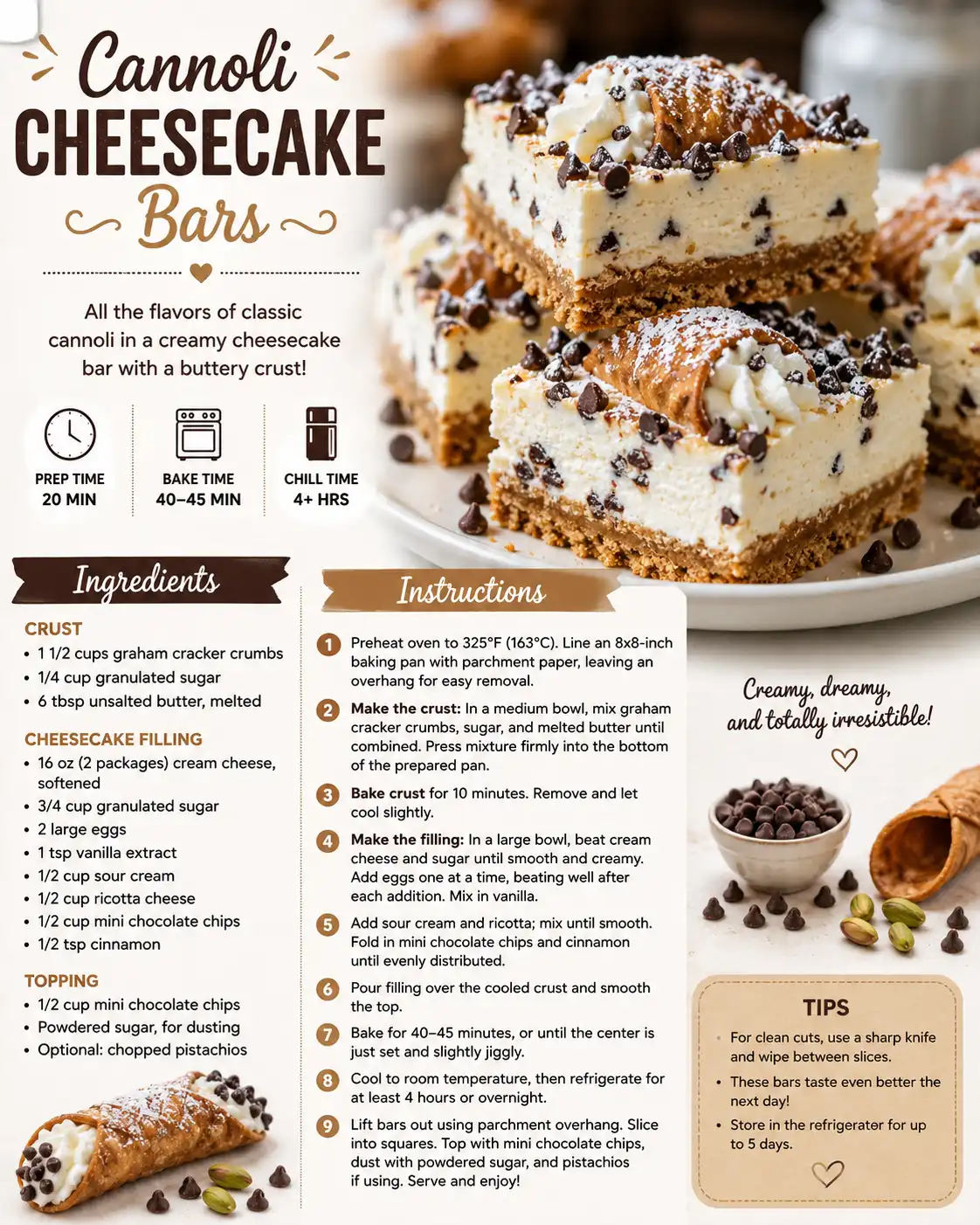
Introduction
Welcome to the ultimate dessert fusion experience that combines the creamy, rich tradition of New York-style cheesecake with the iconic, citrus-kissed filling of a Sicilian cannoli. Cannoli Cheesecake Bars are not merely a dessert; they are a celebration of texture and flavor that bridges the gap between two of the most beloved pastries in the world. Imagine the dense, velvety smoothness of a classic cheesecake filling infused with sweet ricotta cheese, dotted with miniature chocolate chips, and nestled atop a buttery, crisp crust that mimics the fried shell of a traditional cannoli. This recipe is designed for the home baker who seeks to impress guests with something sophisticated yet comforting, offering a handheld convenience that does not compromise on the luxurious mouthfeel of a full-sized cake.
Whether you are preparing for a holiday gathering, a potluck, or simply treating yourself to a weekend indulgence, these bars deliver a complex flavor profile that balances sweetness with a hint of citrus zest and the crunch of toasted nuts. The beauty of this recipe lies in its versatility; it respects the heritage of the original Italian desserts while adapting them for modern baking techniques. By the end of this guide, you will not only know how to bake these bars but also understand the science behind the ingredients, the history that inspired them, and the myriad ways you can customize them to suit your personal palate. Get ready to transform your kitchen into an Italian pastry shop with this comprehensive guide to creating the perfect Cannoli Cheesecake Bars.
The History
To truly appreciate the Cannoli Cheesecake Bar, one must delve into the rich culinary histories of its two parent desserts. The cannoli hails from Sicily, Italy, with roots tracing back to the Arab rule of the island in the 9th century. Originally created as a festive treat for Carnevale, the cannoli consists of a tube-shaped shell of fried pastry dough, filled with a sweet, creamy filling usually containing ricotta. The name itself derives from the Italian word “cannolo,” meaning “little tube,” referring to the metal cylinders used to shape the fried dough. Over centuries, the filling evolved to include chocolate chips, candied fruit, and pistachios, becoming a symbol of Sicilian identity and pride.
On the other hand, cheesecake has a lineage that stretches back to ancient Greece, but the modern iteration we recognize today is largely an American innovation, specifically from New York City in the early 20th century. The introduction of cream cheese by Philadelphia brands revolutionized the texture, making it denser and smoother than the earlier curd-based versions. As Italian immigrants settled in New York, their culinary traditions began to merge with American favorites. The fusion of cannoli and cheesecake is a modern testament to this cultural blending, emerging in bakeries during the late 20th century as chefs sought to combine the distinct ricotta flavor of the cannoli with the structural integrity and popularity of the cheesecake.
The evolution into a “bar” format is a contemporary adaptation driven by the desire for portability and portion control. While whole cheesecakes and individual cannoli require specific plating and utensils, bars offer a casual, easy-to-eat solution that fits perfectly into modern lifestyle trends. This recipe honors both traditions by utilizing the specific cheese blend of the cannoli (ricotta and cream cheese) and the crust elements of the cheesecake, creating a historical bridge between ancient Sicilian festivals and modern American dessert bars.
Ingredients Breakdown
Understanding the role of each component in this recipe is crucial for achieving the perfect texture and flavor balance. Below is a detailed analysis of why specific ingredients are chosen and how they interact during the baking process.
- Ricotta Cheese: This is the heart of the cannoli flavor. Unlike cream cheese, ricotta provides a slightly grainier, lighter texture and a distinct milky sweetness. For the best results, whole milk ricotta is recommended over part-skim, as the higher fat content ensures a creamier mouthfeel and prevents the filling from becoming too dry or crumbly after baking.
- Cream Cheese: While ricotta provides the flavor, cream cheese provides the structure. It acts as a binding agent that allows the bars to hold their shape when cut. Full-fat brick-style cream cheese is essential; avoid tub varieties which contain added stabilizers and water that can alter the baking chemistry.
- Granulated Sugar: Sugar not only sweetens the filling but also interacts with the proteins in the cheese to tenderize the texture. Too little sugar can result in a tart, dense bar, while too much can prevent the filling from setting properly.
- Mini Chocolate Chips: Traditional cannoli filling often includes chopped chocolate, but mini chips are preferred for bars. They distribute more evenly throughout the filling, ensuring every bite contains a touch of chocolate without sinking to the bottom of the pan during baking.
- Cannoli Shells or Graham Crackers: For the crust, you have a choice. Traditionalists may crush actual fried cannoli shells for authenticity, but graham crackers mixed with cinnamon provide a stable, sweet base that complements the ricotta without overpowering it. The fat in the butter binds these crumbs to create a solid foundation.
- Eggs: Eggs act as the primary leavening and setting agent. They coagulate during baking to give the cheesecake its firmness. It is vital to use room-temperature eggs to ensure they emulsify smoothly with the cheese, preventing lumps in the batter.
- Citrus Zest: Orange or lemon zest is a signature element of cannoli filling. The essential oils in the zest cut through the richness of the cheese and sugar, adding a bright, aromatic top note that defines the dessert as a cannoli fusion rather than a standard cheesecake.
- Vanilla Extract: High-quality pure vanilla extract enhances the overall sweetness and rounds out the flavor profile. Artificial vanilla can leave a chemical aftertaste that clashes with the delicate dairy flavors.
- Pistachios: Often used as a garnish, chopped pistachios add a necessary crunch and a pop of color. They also reinforce the Sicilian heritage of the dessert, as pistachios are a traditional cannoli coating.
Step-by-Step Recipe
Creating the perfect Cannoli Cheesecake Bar requires patience and attention to detail. This narrative guide walks you through the process, explaining the reasoning behind each action to ensure success even for first-time bakers.
Phase 1: Preparation and Crust Formation
Begin by preheating your oven to 325 degrees Fahrenheit (165 degrees Celsius). This moderate temperature is crucial; baking cheesecake at too high a heat can cause the eggs to curdle and the top to crack. Line a 9×9 inch square baking pan with parchment paper, leaving an overhang on two sides. This “sling” will allow you to lift the entire batch out of the pan later for cleaner cutting. In a medium bowl, combine your crushed crust ingredients (graham crackers or cannoli shells) with melted butter and a pinch of cinnamon. Press this mixture firmly into the bottom of the pan using the bottom of a measuring cup. A compact crust prevents crumbling when you slice the bars. Bake this crust for 8 minutes to set it, then let it cool while you prepare the filling.
Phase 2: The Filling Emulsion
In a large mixing bowl, combine the softened cream cheese and ricotta. Using a hand mixer or stand mixer on low speed, beat these together until completely smooth. This step is vital; any lumps in the cream cheese will remain in the final product. Scrape down the sides of the bowl frequently. Gradually add the sugar, continuing to mix on low. Once the sugar is incorporated, add the eggs one at a time, mixing just until blended. Overmixing at this stage incorporates too much air, which can cause the bars to rise and fall dramatically, leading to cracks. Finally, fold in the vanilla extract, citrus zest, and mini chocolate chips by hand using a spatula. This ensures the chips remain suspended in the batter.
Phase 3: Baking and Cooling
Pour the filling over the cooled crust, smoothing the top with an offset spatula. Place the pan in the center of the oven. Bake for 35 to 45 minutes. The key indicator of doneness is the “jiggle test.” The edges should be set and slightly puffed, but the center should still wobble slightly like Jell-O when you gently shake the pan. This residual heat will continue to cook the center as it cools. Turn off the oven and crack the door open slightly, letting the bars cool inside for an hour to prevent thermal shock. Afterward, remove them from the oven and let them reach room temperature on a wire rack before transferring them to the refrigerator. Chilling for at least 4 hours, preferably overnight, is non-negotiable for clean slices.
Tips
To ensure your Cannoli Cheesecake Bars turn out flawlessly every time, consider these professional baking tips and troubleshooting strategies.
- Room Temperature Ingredients: Always allow your cream cheese, ricotta, and eggs to sit out for at least two hours before baking. Cold ingredients do not blend smoothly, leading to a lumpy batter that may bake unevenly.
- Draining Ricotta: If your ricotta cheese seems particularly watery, place it in a fine-mesh sieve over a bowl for 30 minutes before using. Excess moisture can prevent the bars from setting firmly.
- Cutting Cleanly: To get perfect square bars, use a sharp knife dipped in hot water. Wipe the blade clean between each cut. This prevents the filling from dragging and smudging the edges.
- Storage: These bars must be stored in the refrigerator. They can be kept in an airtight container for up to 5 days. For longer storage, they freeze well for up to 2 months if wrapped individually in plastic wrap.
- Avoiding Cracks: Do not overbeat the eggs. Once the eggs are added, mix only until just combined. Additionally, the gradual cooling process in the oven helps prevent the surface from cracking due to sudden temperature changes.
- Parchment Paper: Do not skip the parchment paper sling. Cheesecake bars can stick stubbornly to the pan, and trying to dig them out will ruin the presentation.
Variations and Customizations
While the classic recipe is divine, there are numerous ways to adapt this dessert to suit different tastes, dietary needs, or seasonal themes.
- Chocolate Crust: Replace graham crackers with crushed chocolate wafer cookies or Oreos (without the filling) for a richer, darker base that pairs beautifully with the sweet ricotta.
- Gluten-Free: Use gluten-free graham crackers or almond flour for the crust. Ensure all other ingredients, such as the chocolate chips, are certified gluten-free.
- Pumpkin Spice: During the autumn months, add a quarter cup of pumpkin puree and a teaspoon of pumpkin pie spice to the filling for a seasonal twist.
- Sugar-Free: Substitute granulated sugar with a monk fruit or erythritol blend suitable for baking. Note that this may slightly alter the texture, making it less caramelized.
- Candied Fruit: For a traditional Sicilian touch, fold in finely chopped candied orange peel or cherries along with the chocolate chips.
- Chocolate Drizzle: Instead of mixing chips into the filling, keep the filling plain and drizzle melted dark chocolate over the top of the chilled bars before serving.
- Vegan Option: Use cashew-based cream cheese and almond ricotta substitutes, along with a flax egg replacement. While the flavor profile will differ, it can mimic the creamy texture effectively.
Health Considerations and Nutritional Value
It is important to approach this dessert with an understanding of its nutritional profile, as it is an indulgent treat rather than a health food. However, compared to standard cheesecake, the inclusion of ricotta does offer some nutritional benefits. Ricotta cheese is generally lower in fat and calories than cream cheese and provides a good source of protein and calcium. A single bar typically contains between 250 to 350 calories, depending on the size of the cut and the specific ingredients used.
The primary sources of calories come from the sugars and the fats in the cheese and crust. For those monitoring sugar intake, reducing the sugar in the filling by 25% is possible without significantly affecting the texture, as the ricotta provides natural sweetness. The nuts used for garnish provide healthy monounsaturated fats and fiber. While this dessert should be enjoyed in moderation, the protein content from the cheeses can make it slightly more satiating than a flour-heavy cake. Those with lactose intolerance should note that ricotta contains less lactose than other fresh cheeses, but it is not lactose-free. Always consult nutritional labels on specific brands of cheese and chocolate chips for accurate macro counting.
Ingredients
- For the Crust:
- 1 ½ cups graham cracker crumbs (or crushed cannoli shells)
- ¼ cup granulated sugar
- ½ teaspoon ground cinnamon
- 6 tablespoons unsalted butter, melted
- For the Filling:
- 16 ounces full-fat cream cheese, softened to room temperature
- 15 ounces whole milk ricotta cheese, drained
- 1 cup granulated sugar
- 3 large eggs, room temperature
- 1 teaspoon pure vanilla extract
- 1 teaspoon orange zest (or lemon zest)
- ½ cup mini semi-sweet chocolate chips
- ¼ cup chopped pistachios (for garnish)
- 1 tablespoon powdered sugar (for dusting)
Directions
- Preheat your oven to 325°F (165°C). Line a 9×9 inch baking pan with parchment paper, leaving an overhang on two sides for easy removal.
- In a medium bowl, mix the graham cracker crumbs, ¼ cup sugar, and cinnamon. Stir in the melted butter until the mixture resembles wet sand.
- Press the crust mixture firmly into the bottom of the prepared pan. Bake for 8 minutes, then remove and let cool completely.
- In a large bowl, beat the softened cream cheese and ricotta cheese together on low speed until smooth and creamy, about 2 minutes.
- Add the 1 cup of sugar and mix until fully incorporated. Scrape down the sides of the bowl.
- Add the eggs one at a time, mixing on low speed just until blended after each addition. Do not overmix.
- Stir in the vanilla extract and orange zest by hand. Gently fold in the mini chocolate chips.
- Pour the filling over the cooled crust and smooth the top with a spatula.
- Bake for 35 to 45 minutes. The edges should be set, but the center should still jiggle slightly when shaken.
- Turn off the oven and crack the door open. Let the bars cool inside for 1 hour.
- Remove from the oven and cool completely on a wire rack, then refrigerate for at least 4 hours or overnight.
- Lift the bars out of the pan using the parchment paper. Garnish with chopped pistachios and powdered sugar before slicing into squares.
FAQ
Can I make these bars ahead of time?
Yes, these bars actually taste better after sitting in the refrigerator for 24 hours. The flavors have time to meld, and the texture becomes firmer, making them easier to cut. You can prepare them up to 3 days in advance of serving.
Why did my cheesecake bars crack on top?
Cracking is usually caused by overmixing the batter after adding the eggs or cooling the bars too quickly. Ensure you mix on low speed once the eggs are added and follow the gradual cooling process in the oven with the door cracked.
Can I freeze Cannoli Cheesecake Bars?
Absolutely. Wrap individual bars tightly in plastic wrap and then place them in a freezer-safe bag. They will keep for up to 2 months. Thaw them in the refrigerator overnight before serving.
Do I have to use ricotta cheese?
For the authentic cannoli flavor, ricotta is essential. However, if you cannot find it, you can substitute with mascarpone for a richer texture, though the flavor profile will shift away from traditional cannoli.
How do I store leftovers?
Keep leftovers in an airtight container in the refrigerator. They are best consumed within 5 days. Do not leave them at room temperature for more than 2 hours due to the dairy content.
Can I use low-fat cheese?
It is not recommended. Low-fat cream cheese and ricotta contain more water and less fat, which can result in a runny filling that does not set properly and lacks the creamy mouthfeel characteristic of this dessert.
Summary
These Cannoli Cheesecake Bars fuse Sicilian tradition with American comfort, offering a creamy ricotta filling on a crisp crust.
Perfect for gatherings, they are easy to make, customizable, and deliver a luxurious dessert experience in every bite.