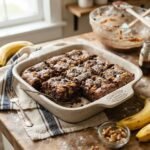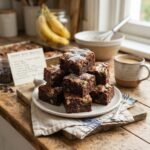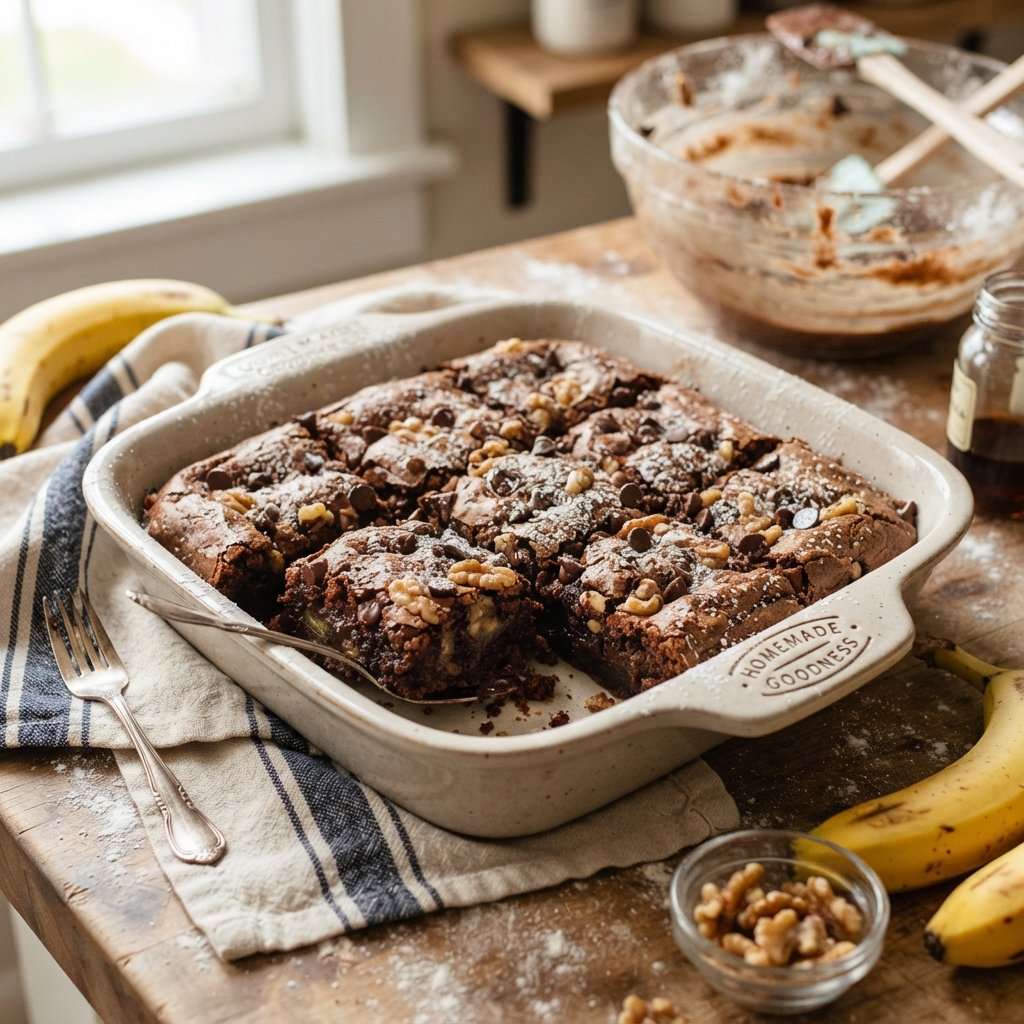
Ultimate Banana Bread Brownies
Introduction
Welcome to the ultimate fusion of two classic comfort desserts: the moist, dense richness of a fudge brownie and the sweet, aromatic warmth of homemade banana bread. Banana Bread Brownies are not merely a dessert; they are an experience that bridges the gap between breakfast nostalgia and midnight indulgence. This hybrid treat captures the best qualities of both worlds, offering a velvety texture that is neither too cakey nor too dense, but perfectly chewy with pockets of caramelized banana sweetness. Whether you are looking to use up overripe bananas sitting on your counter or you are seeking a show-stopping dessert for a potluck, this recipe delivers consistent, decadent results every time.
The appeal of this recipe lies in its versatility and its ability to evoke memories. The scent of baking bananas mixed with melted chocolate fills the kitchen with an aroma that is instantly comforting. Unlike traditional brownies that rely solely on cocoa for flavor depth, these brownies incorporate mashed ripe bananas which act as a natural sweetener and moisture agent, reducing the need for excessive fats while enhancing the structural integrity of the crumb. The result is a bar cookie that stays moist for days, develops a beautiful crackly top crust, and offers a complex flavor profile that balances bitterness from the chocolate with the natural sugars of the fruit.
In this comprehensive guide, we will explore every facet of creating the perfect Banana Bread Brownie. From the historical origins of the component desserts to the chemical reactions occurring within your oven, you will gain a mastery over the baking process. We will delve into ingredient functionality, troubleshooting common baking pitfalls, and exploring endless customization options to suit dietary needs or flavor preferences. Prepare to elevate your baking repertoire with a recipe that promises to become a permanent fixture in your culinary rotation.
The History
To understand the Banana Bread Brownie, one must first appreciate the lineage of its parents. Banana bread itself is a quintessential example of American resourcefulness, gaining significant popularity during the Great Depression in the 1930s. When food waste was economically unfeasible, home bakers sought ways to utilize overripe bananas that would otherwise be discarded. The addition of baking soda, which became widely available around the same time, allowed for the leavening necessary to turn a mashed banana mixture into a loaf. By the 1940s, banana bread had secured its place in community cookbooks and became a staple of American home baking.
Brownies, on the other hand, have a slightly more debated origin story, though most food historians trace them back to the late 19th century in the United States. The first known printed recipe appeared in the 1896 Boston Cooking-School Cook Book by Fanny Farmer, though it was more of a molasses candy than the chocolate bar we know today. The modern chocolate brownie evolved in the early 1900s, gaining massive popularity during the 1950s as a convenient, handheld dessert that required no plates or utensils. The brownie represents indulgence, richness, and the pure joy of chocolate.
The fusion of these two icons is a product of the modern culinary era, specifically the rise of “hybrid desserts” in the 21st century. As bakers began experimenting with cronuts, brookies (brownie-cookie hybrids), and other mashups, the combination of banana bread and brownies emerged naturally. It addresses a common problem for bakers: having too many ripe bananas but craving chocolate. This hybridization reflects a broader trend in home baking where comfort meets innovation, allowing bakers to reduce sugar content naturally through fruit while maintaining the decadent texture associated with confectionery. Today, Banana Bread Brownies stand as a testament to culinary evolution, honoring tradition while embracing creativity.
Ingredients Breakdown
Understanding the function of each ingredient is crucial for baking success. In Banana Bread Brownies, the balance between moisture and structure is delicate. Here is a detailed analysis of why each component is included and how it affects the final product:
- Ripe Bananas: The star of the show. You need bananas that are heavily speckled with brown or even entirely black. At this stage, the starches have converted to sugars, providing maximum sweetness and moisture. They also act as a binder, replacing some of the need for eggs or oil.
- Unsalted Butter: Butter provides richness and flavor. Using unsalted allows you to control the sodium content precisely. Melted butter contributes to a fudgier texture compared to creamed butter, which incorporates more air and leads to a cakey result.
- Granulated Sugar: Sugar is not just for sweetness; it contributes to the texture. During baking, sugar liquefies and then recrystallizes as it cools, helping to form that desirable crackly crust on top of the brownies.
- Brown Sugar: Often used in combination with white sugar, brown sugar contains molasses. This adds moisture, a hint of caramel flavor, and acidity which reacts with baking soda to help the brownies rise slightly.
- Eggs: Eggs provide structure and emulsification. The proteins in the eggs coagulate during baking, setting the shape of the brownie. They also add richness and help bind the fat and water components together.
- Vanilla Extract: Pure vanilla extract enhances the perception of sweetness and rounds out the flavor profile. It complements both the chocolate and the banana notes without overpowering them.
- All-Purpose Flour: This provides the gluten structure. Unlike bread, you do not want to develop too much gluten, or the brownies will become tough. Just enough is needed to hold the batter together.
- Cocoa Powder: Unsweetened cocoa powder provides the deep chocolate flavor. Dutch-processed cocoa will yield a darker, smoother flavor, while natural cocoa powder offers a slightly more acidic and fruity chocolate note.
- Salt: Salt is a flavor enhancer. It suppresses bitterness from the cocoa and amplifies the sweetness of the sugar and bananas. A pinch of flaky sea salt on top before baking can elevate the gourmet feel.
- Baking Soda: This leavening agent reacts with the acidity in the bananas and brown sugar to create carbon dioxide bubbles, giving the brownies a slight lift without making them fluffy like a cake.
- Chocolate Chips (Optional): Adding semi-sweet or dark chocolate chips introduces pockets of melted chocolate, adding texture contrast and intensifying the chocolate experience.
Step-by-Step Recipe
Creating the perfect batch requires attention to detail at every stage. This narrative guide walks you through the process, explaining the why behind each action to ensure you understand the technique.
Phase 1: Preparation and Preheating
Begin by preheating your oven to 350°F (175°C). Consistency in oven temperature is key; if your oven runs hot, consider lowering it to 325°F to prevent the edges from burning before the center sets. Line a 9×9 inch baking pan with parchment paper, leaving an overhang on two opposite sides. This “sling” method allows you to lift the entire batch of brownies out of the pan once cooled, ensuring clean cuts and easy serving. Lightly grease the parchment paper with butter or non-stick spray to prevent sticking.
Phase 2: The Banana Base
Peel your ripe bananas and place them in a large mixing bowl. Using a fork or a potato masher, mash the bananas until they are mostly smooth, though a few small chunks are acceptable and add texture. You should aim for about 1 cup of mashed banana. If you have excess liquid, do not drain it; that liquid is flavor and moisture. Add the melted butter directly to the warm bananas. The warmth helps the butter incorporate smoothly without seizing.
Phase 3: Sugar and Eggs
Whisk the sugars into the banana-butter mixture. You want to dissolve as much sugar as possible at this stage to aid in crust formation. Once combined, add the eggs one at a time, whisking vigorously after each addition. This emulsification step is critical; you want the batter to look glossy and slightly thickened. Stir in the vanilla extract now. If the mixture looks slightly separated, do not worry; the flour will bring it back together.
Phase 4: Dry Ingredients
In a separate bowl, sift together the flour, cocoa powder, baking soda, and salt. Sifting is important to remove lumps from the cocoa powder, which can be bitter if bitten into directly. Gently fold the dry ingredients into the wet mixture using a spatula. Use a cutting and folding motion rather than circular stirring. Stop mixing as soon as the last streak of flour disappears. Overmixing activates gluten, leading to tough brownies.
Phase 5: Baking and Cooling
Pour the batter into the prepared pan and smooth the top with an offset spatula. If adding chocolate chips or nuts, sprinkle them now. Bake for 25 to 30 minutes. The key to fudgy brownies is not overbaking. Insert a toothpick into the center; it should come out with a few moist crumbs attached, not completely clean. If it is wet batter, give it another minute. Once done, remove from the oven and let cool completely in the pan. This cooling period allows the structure to set, making slicing easier.
Tips
To ensure your Banana Bread Brownies are flawless every time, consider these professional baking tips and troubleshooting strategies:
- Ripeness Matters: Do not use yellow bananas. They must be blackened. If you are in a hurry, you can bake whole unpeeled bananas on a baking sheet at 300°F for 15-20 minutes until the skins turn black, then cool and mash.
- Measure Flour Correctly: Scooping flour directly with a measuring cup compacts it, leading to dry brownies. Instead, spoon the flour into the cup and level it off with a knife, or weigh your flour for precision.
- Room Temperature Ingredients: Ensure eggs and butter are at room temperature before mixing. This allows for better emulsification and a smoother batter.
- Don’t Overbake: Brownies continue to cook slightly from residual heat after being removed from the oven. Pull them out when they still look slightly underdone in the very center.
- Cool Completely: Patience is vital. Cutting warm brownies causes them to crumble. For the cleanest squares, chill the pan in the refrigerator for an hour before slicing.
- Parchment Paper is Non-Negotiable: Greasing the pan alone is often insufficient for sticky brownie batter. Parchment paper guarantees easy removal.
- Enhance Chocolate Flavor: Add a teaspoon of instant espresso powder to the dry ingredients. It won’t make the brownies taste like coffee; it will deepen the chocolate flavor.
- Storage: Store in an airtight container at room temperature for up to 3 days. For longer storage, refrigerate for up to a week or freeze for up to 3 months.
- Reviving Stale Brownies: If they dry out, microwave a single square for 10 seconds before eating to restore moisture and warmth.
- Pan Size Adjustment: If using a 9×13 pan, double the recipe. If using an 8×8 pan, expect thicker brownies and add 5 minutes to the baking time.
Variations and Customizations
One of the greatest strengths of this recipe is its adaptability. You can modify the base recipe to accommodate dietary restrictions or to explore new flavor profiles without sacrificing texture.
- Gluten-Free: Substitute the all-purpose flour with a 1:1 gluten-free baking blend. Ensure the blend contains xanthan gum, or add 1/4 teaspoon separately, to mimic the binding properties of gluten.
- Vegan: Replace eggs with flax eggs (1 tablespoon ground flaxseed meal mixed with 3 tablespoons water per egg). Use vegan butter or coconut oil instead of dairy butter.
- Nut-Free: Simply omit any walnut or pecan additions. Ensure your chocolate chips are processed in a nut-free facility if allergies are severe.
- Peanut Butter Swirl: Drop dollops of creamy peanut butter on top of the batter before baking and use a knife to swirl it gently into the surface for a marbled effect.
- Tropical Twist: Add 1/2 cup of shredded coconut and 1/4 cup of chopped macadamia nuts to the batter for a Hawaiian-inspired version.
- Spiced: Incorporate 1 teaspoon of cinnamon and a pinch of nutmeg into the dry ingredients to complement the banana flavor with warm spice notes.
- White Chocolate: Swap semi-sweet chips for white chocolate chips to create a sweeter, creamier contrast against the dark cocoa.
- Lower Sugar: Reduce the granulated sugar by 25% and rely on the sweetness of very ripe bananas. You can also use a erythritol blend for a keto-friendly option.
- Sea Salt Topping: Sprinkle flaky Maldon sea salt on top of the batter right before baking for a sophisticated sweet-and-salty finish.
- Cream Cheese Swirl: Beat cream cheese with sugar and an egg, drop onto the batter, and swirl for a cheesecake-brownie hybrid experience.
Health Considerations and Nutritional Value
While Banana Bread Brownies are a treat, understanding their nutritional profile helps in managing portion sizes and making informed dietary choices. Traditionally, brownies are high in calories, saturated fats, and sugars. However, the inclusion of bananas offers some nutritional benefits that standard brownies lack.
Caloric Density: A standard serving (one 2-inch square) typically ranges between 200 to 300 calories, depending on the amount of sugar and chocolate used. The bananas add volume without adding significant calories compared to additional flour or fat.
Sugar Content: The natural fructose in bananas reduces the reliance on refined white sugar. However, the total carbohydrate count remains high. Diabetics or those monitoring blood sugar should consume this in moderation.
Fats: The butter contributes to saturated fat content. Substituting half the butter with unsweetened applesauce or Greek yogurt can reduce fat content while maintaining moisture.
Micronutrients: Bananas are a good source of Potassium and Vitamin B6. Cocoa powder contains antioxidants, specifically flavonoids, which are linked to heart health. While the amounts in a brownie are small, they are present.
Fiber: Using whole wheat pastry flour instead of all-purpose flour can increase the fiber content, aiding in digestion and providing a slower release of energy.
Portion Control: Because these brownies are dense and rich, smaller portions are often more satisfying. Cutting the batch into 16 squares instead of 9 helps manage intake without feeling deprived.
Ingredients
- 3 large ripe bananas, mashed (about 1 1/2 cups)
- 1/2 cup unsalted butter, melted
- 1 cup granulated sugar
- 1/2 cup packed brown sugar
- 2 large eggs, room temperature
- 2 teaspoons vanilla extract
- 3/4 cup all-purpose flour
- 1/2 cup unsweetened cocoa powder
- 1/2 teaspoon baking soda
- 1/4 teaspoon salt
- 1/2 cup semi-sweet chocolate chips (optional)
- 1/2 cup chopped walnuts or pecans (optional)
Directions
- Preheat your oven to 350°F (175°C). Line a 9×9 inch baking pan with parchment paper, leaving an overhang for easy removal, and grease lightly.
- In a large mixing bowl, mash the ripe bananas until smooth. Pour in the melted butter and stir to combine.
- Add the granulated sugar and brown sugar to the banana mixture. Whisk vigorously for about one minute to dissolve the sugars.
- Beat in the eggs one at a time, ensuring each is fully incorporated before adding the next. Stir in the vanilla extract.
- In a separate medium bowl, sift together the flour, cocoa powder, baking soda, and salt to remove any lumps.
- Gently fold the dry ingredients into the wet ingredients using a spatula. Mix only until no white streaks of flour remain.
- If using, fold in the chocolate chips and nuts gently.
- Pour the batter into the prepared pan and spread it evenly into the corners.
- Bake for 25 to 30 minutes. Test with a toothpick; it should come out with moist crumbs, not wet batter.
- Remove from the oven and allow to cool completely in the pan on a wire rack.
- Lift the brownies out using the parchment paper overhang, place on a cutting board, and slice into squares.
FAQ
Can I use frozen bananas?
Yes, thaw frozen bananas completely before using. Drain any excess liquid that accumulates during thawing to prevent the batter from becoming too watery.
Why did my brownies sink in the middle?
This usually indicates underbaking or opening the oven door too early. Ensure the center is set before removing them from the oven.
Can I make these without cocoa powder?
You can substitute melted chocolate for cocoa powder. Use 4 ounces of melted bittersweet chocolate in place of the cocoa powder and reduce the butter slightly.
How do I get a crackly top?
Whisking the sugar and eggs thoroughly until the mixture is glossy before adding the flour helps dissolve the sugar, which promotes a crackly crust upon baking.
Can I double the recipe?
Yes, double the ingredients and use a 9×13 inch pan. You may need to add 5 to 10 minutes to the baking time.
Why are my brownies cakey?
This is likely due to overmixing the batter or using too much flour. Measure flour carefully and mix gently.
Do I need to refrigerate them?
No, they can be stored at room temperature in an airtight container. Refrigeration is only necessary in very hot climates or if you prefer a colder texture.
Summary
Banana Bread Brownies combine the moist sweetness of ripe bananas with the rich decadence of chocolate for a perfect hybrid dessert.
Follow the detailed steps and tips above to create a fudgy, flavorful treat that delights bakers and eaters alike.